Showing posts with label B. Frank. Show all posts

Tuesday, May 19, 2009

On limits

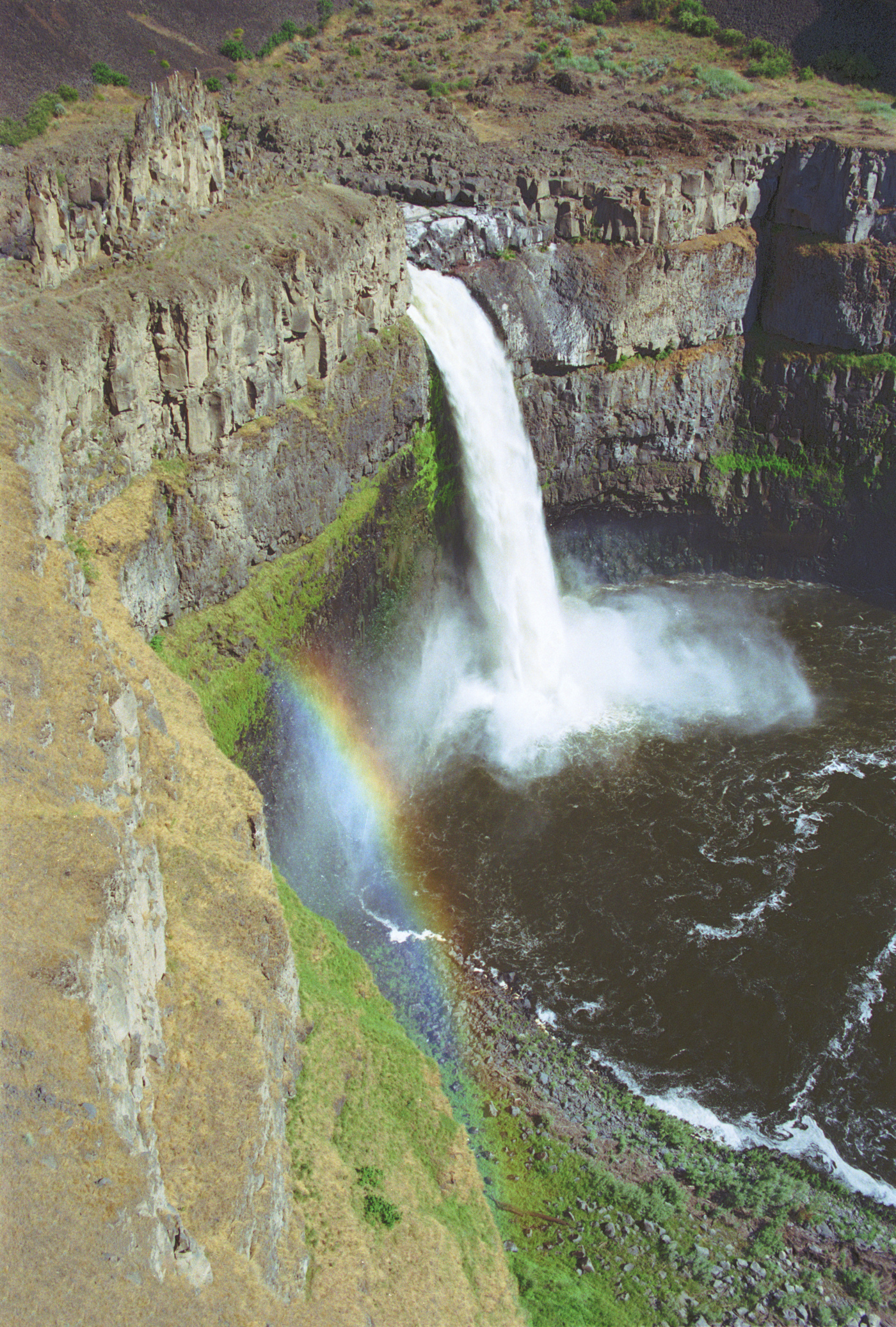
“I hope it encourages people not to run huge waterfalls but to understand that the only limits that exist are the ones you create, no matter what you are doing.”
[Tyler Bradt, in Kayak Session Magazine interview]
Palouse Falls [Photo credit:D S Dugan]


(Forgive the departure from home range limitations, but I couldn't resist this one.)

Thursday, May 14, 2009

Speaking of Grizz

Here is more Doug Peacock on Democracy Now!, on encountering the wild with respect:

and on addressing the wilderness within:

Don't forget to listen to local radio station KDUR, which broadcasts DemocracyNow! at 12 noon on weekdays, and support the airing of such opinions.

P. S. - Once you've read Dave Peterson's book on grizzlies in the San Juans, think about checking out "In the Presence of Grizzlies, Revised and Updated" [2009, Doug Peacock & Andrea Peacock]. It's newly out in paperback, and I bet your favorite local bookstore can find you a copy.

Friday, April 24, 2009

Home = land, Peacocks, ol' Ed, and bear country!


Democracy Now!, locally available on Durango's own community radio KDUR, has been traveling the western reaches, giving voice to seldom-aired commentaries on the madding empire. In the above interview, Doug Peacock echoes a phrase voiced just yesterday by our own, ever-lovin' sabot-packer, Ken Wright.

Amy Goodman has been soliciting story ideas from the areas they are visiting on this tour, and she will be speaking at the Green Festival in Denver on May 2. Got one?

Tuesday, April 21, 2009

Some things change, and some don't

This is a not so sweet summary of the EPA's announcement last week that it will regulate greenhouse gases, if Congress cannot find a way to do it first.

Here's a summary of the science behind the proposed action, and how to comment. On both sides of the budding war-o'-words, others are already weighing in. In an interview with ABC News over the weekend, U. S. House Republican Leader John Boehner said, "George, the idea that carbon dioxide is a carcinogen that is harmful to our environment is almost comical. Every time we exhale, we exhale carbon dioxide. Every cow in the world, you know, when they do what they do, you’ve got more carbon dioxide. And so I think it’s clear…"

Incidentally, the EPA's summary does not contend that CO2 is directly carcinogenic, and Boehner seems to have confused carbon dioxide with methane (another of the gases indicted in the EPA documents). Here's an overview of recent increases.

U.S. Greenhouse Gas Emissions by Gas. [Reference: Inventory of U.S. Greenhouse Gas Emissions and Sinks: 1990-2006, USEPA #430-R-08-005]

Regardless of facts, Congress can exempt industries from following such seemingly powerful laws as the Clean Air Act, and John Boehner's Congressional position gives him a very large stick in the debate over how to address some gorillas affecting (and fed by) our neck of the national woods.

Some recent history:

(As referenced above, H. R. 7231 was sponsored by Colorado Representative Diana De Gette in the 110th Congress, and co-sponsored by John Salazar. It died in a sub-committee.)

Sunday, March 29, 2009

Thursday, March 12, 2009

On crying Wolf too soon... so long to "Macho B"

[map courtesy: Northern Jaguar Project]

For over a decade, a jaguar graced a mountain range I know well. Though ancestral jaguar habitat stretches all the way to the Colorado Plateau, researchers dubbed this cat "Macho B," perhaps as a nod to the concept of a Mexican origin. Every now and then a motion-detecting camera snapped his picture, so though I never saw him or his track, I knew he was there. Though the mountain range became a sacrifice zone in a border war seemingly without end, crisscrossed by night-trails, haunted by overflights, and subject to a migration-fighting wall, the jaguar survived. Other than occasional pictures, very little information was gathered on his day-to-day movements. In late February, he finally stepped in a snare, was radio-collared and released. When I heard the news, I posted a picture here with a celebratory comment that likely offended chihuahua lovers far and wide. On March 2, Arizona Game & Fish announced that the jaguar had been recaptured, transported to the Phoenix Zoo, and 'euthanized.' The post-mortem diagnosis was kidney failure. Here is an obituary, posted by Defenders of Wildlife, along with an overview of the group's Northern Jaguar recovery efforts. Also, the Center for Biological Diversity is soliciting donations to its Jaguar Recovery Fund, to pursue a lawsuit over habitat management.

I learned of of the jaguar's death as I was preparing a celebratory welcome for another species. On February 25th, a lone female wolf was recorded in Colorado, not far from Interstate 70 in Eagle County. This wolf was wearing a collar not much different from the one placed on the jaguar known as Macho B, and researchers had been able to trace her on a circuitous 1,000 mile route from a pack based north of Yellowstone National Park. According to the press release, she has roamed parts of Montana, Idaho, Wyoming, Utah, and into Colorado, crossing from the Northern to Southern Rockies Ecosystem in the process. At least one other wolf made it this far in 2004, only to be killed as he tried to navigate the always dangerous I-70. At least for now, all wolves wandering into Colorado are to be treated as an endangered species, though with last week's decision by the Interior Department to de-list the Northern Rockies population, all bets are off.

In 2007, the Colorado Division of Wildlife posted video of another possible wolf north of Steamboat Springs:

I found no other reported sightings for this one, and there is no more public data on last month's sighting.

As usual, all these incidents received temporary media coverage in their respective areas, with just enough details to feed emotional responses ranging from fear through pity, with side trips into nostalgia and mourning. Realizing that one consideration missing from all accounts was a consideration of the fragmented landscape these animals had passed through, for the past few days I've been seeking habitat and wildlife corridor maps to add to the discussion. The news is not good, but this is what I've found...

Though efforts to define and establish wildlife corridors have been underway throughout the West for over twenty years, current knowledge is as fragmented as the habitat various groups are trying to 'save.' Arbitrary boundaries, ranging from the U. S. / Mexico border to a definition of 'Northern' vs. 'Southern' Rockies, limit maps and management plans to narrow areas of intense focus, surrounded by vast stretches of habitat incognita that wandering wildlife must navigate. A good source for an overview is the Western Governors' Association Wildlife Corridors Initiative Report, published in June, 2008. At 120 pages of politic prose, it could get you through a sleepless night, and may leave you howling in sympathy with the wandering wolf; but a set of maps on pages 12 to 26 should get you started thinking about just where we have to go from here, to move beyond overly studied and overtly controlled populations of feared and pitied trophy species, eventually hunted or "euthanized" from habitat once wild enough to call home.

[Wildlands Network Design map of Colorado (Southern Rockies Ecosystem Project)]

For more on wildlife corridor works-in-progress:

Saturday, February 21, 2009

More from the science of appearances file...

[photo: Arizona Game and Fish Dept.]

Sometimes you're looking for lions, and catch a jaguar instead. Having considered this possibility, the research team attached a collar, and released the 118 pound male to continue roaming a landscape that trumps the concept of national borders. This may be the jaguar known as Macho B, appearing only as an image on motion-triggered cameras for the last thirteen years, or it may be another male migrating toward the northern portions of ancestral jaguar range; but the knowledge gleaned from this accidental trapping will further complicate the politics of fencing the empire.

So far the satellite-uplinked jaguar has stayed south of Tucson, but his ancestors once hunted the rims of the Grand Canyon. A quick glance at the habitat map I posted here last week should encourage you to consider adding jaguars to your phenological "watch for" list, and might give further incentive to teach your poodles and chihuahuas to heel.

Thursday, February 12, 2009

Pythons along the ol' San Juan?... on the "science of appearances"


[ U.S. Geological Survey, Department of the Interior / National Park Service photo by Lori Oberhofer]

Last year, the U. S. Geological Survey released a study projecting that the climate of the Four Corners region could become habitable for pythons, just one long lifetime from now.


[Projected climate in the continental United States in the year 2100, based on global warming models, that matches climate in the pythons' native range in Asia. USGS image.]

Midway through this winter of seriously weird weather, while waiting for fresh pow to blanket the back country of my home range, I took a walk on the mesa the other day. Snow was melting off the fields, and in some south-facing furrows, I got a glimpse of the future. Not pythons, gators, or tigers; but, oh my, green-up was in full (so to speak) 'bloom.'

Got your attention?...a call for citizen-scientists
"Phenology is the study of periodic plant and animal life cycle events and how these are influenced by seasonal and interannual variations in climate. Examples include the timing of leafing and flowering, agricultural crop stages, insect emergence, and animal migration. All of these events are sensitive measures of climatic variation and change, are relatively simple to record and understand, and are vital to both the scientific and public interest." [USA National Phenology Network(USANPN)]

Long the province of of a disorganized rabble of farmers, hunters, gatherers, and peripatetic seekers of random knowledge (see Thoreau's "Faith in a Seed"), citizen-phenologists now have a budding national network to collate and analyze their observations. Since 2007, the USANPN has collected botanical data in two programs, Project Budburst and NPN Core Protocols, to document budding and blooming times. Both are looking for citizen observers, so all interested plant-gazers should check them out.

In December 2008, USGS announced the launch of a new Wildlife Phenology Program, a partnership between USANPN and The Wildlife Society. Data collection will begin in 2010, giving plenty of time to document the projected invasion of our beloved local waters by the dreaded duo depicted above. (OK, those two were doing the dance of death in Everglades National Park. Be careful in the Big Bend country though. See below.)


[Current areas of the continental United States with climate matching that of the pythons' native range in Asia. USGS image.]

Sunday, February 8, 2009

Happy Darwin Day!

Who knew? Here in the officially EPA-sanctioned Year of Science, the long-dead hero/bogeymen of one of the troubled empire's longest running culture wars is a hot ticket. I've just read Darwin-themed issues of National Geographic and Smithsonian, listened to his great-great-grandson on NPR's Science Friday, and even found a countdown to his birthday.

Darwin Day 2009

Despite Durango's party-town rep, as far as I know our home range is devoid of Darwin Day celebrations (the closest I could find are in Albuquerque and Tucson), but you can search for one, or organize your own.

For a more sober treatment of Darwin's Big Idea, here's a bit of the History of Evolutionary Thought, and last month's Scientific American Magazine, on the "Evolution of Evolution."

Monday, February 2, 2009

More of the power of pictures - and sounds

Pending a Four Corners follow-up on Mr. Wright's great link to Magnum Photo's "The Places We Live," here's a BBC story about organic farming near the Kibera, Kenya slum, with photographs...
Mohamed and pumpkin
(Mohamed and the pumpkin [BBC Worldservice, some rights reserved])
The surroundings
(The surroundings [BBC Worldservice, some rights reserved])

a Google map of Kibera...


and more pictures.

Monday, January 12, 2009

ABCC's (Ash, Backyards, 'Clean' Coal), the river, me 'n' you ...


Video of area affected by a Tennessee Valley Authority pond breach.
(by Chloe White/knoxnews.com)

Ash is an inevitable waste product of coal combustion. If not dispersed onto the landscape through the smokestacks, then it must be kept, somewhere. According to figures obtained by the Associated Press, 461,700 tons of coal ash is currently stored in New Mexico.


Much of this is near the Four Corners Power Plant...

...and the San Juan Generating Station.
The San Juan River flows between them.

Some area residents have waged a multi-year battle to monitor and control any leaching of toxins into their groundwater. Just over a year ago, High Country News had a primer on coal combustion waste (CCW) in the Four Corners area, written by Jonathon Thompson. Check it out, while contemplating a kayak float on Morgan Lake, with Four Corners Power Plant as landscape.

Monday, December 22, 2008

Change - "...we are the ones we have been waiting for."

Last Friday, as George W. Bush sought desperately to defer reckonings for eight years of foreign policy, economic, and environmental blundering onto the next administration, - Tim DeChristopher took a final exam on economics, walked into a BLM auction in downtown Salt Lake City, took a bidding number, and threw a wrench into one of the outgoing administration's machinations to deliver lasting gifts to extraction industries all over our map.


Patrick Shea, a Clinton-era head of the Bureau of Land Management, has offered to represent DeChristopher in any legal actions, and though at this point he lacks the $1,700,000 it would take to claim his winning bids on 22,000 acres, this act of very civil disobedience will delay any re-auctioning of a few pieces of Utah's canyon country until after January 20th. DeChristopher further explains his action on the One Utah blog, where you can thank him, and donate to a legal fund.

Tuesday, December 16, 2008

On getting back from beyond

This is a view I hope to experience only this way, through my laptop window to a big scary world of hoping your trusty avalanche beacon will help your friends dig out your remains, with their trusty avalanche shovels and probes.


[Avalanche in Pau, by an organization listed only as the "Snow Safety Center"]


Think you know how to avoid the rush, and crush of an avalanche? Here's a terrain quiz, from csac.org.

Want to know more? The Silverton Avalanche School started
enrollment for their 2009 classes today. According to the website, there are still open slots.

Can't wait to start learning more? Here is a
reading list, suggested by the folks at the Avalanche School. Shop indie, and find your bookstore here.

Can't wait to get started? Check the Colorado Avalanche Information Center for snow conditions, before you pack that gear and hit the backcountry, beyond the beacons and safety nets.

Welcome back to winter, gang.

Thursday, December 4, 2008

From the change research facility...


Odetta (December 31, 1930 - December 2, 2008)


(Video produced by Playing For Change.)
Here's a Bill Moyers interview with the producer, Mark Johnson.

And today...


A Solar Taxi finished an around the world tour at the UN climate change talks in Poznan, Poland.

Wednesday, November 26, 2008

Giving Thanks for...

,

,


and our famous foursome of Durango breweries: Ska, Steamworks, Durango, Carvers. Holiday "Cheers!" to all brewmasters, in no particular order.

For a fine head of Guinness foam, check out the scene at Durango's Irish Embassy, and give a shout out to Lani or Sarah. If you'd like 12 or 16 inches of pure pleasure with that beer, better give our hometown Home Slice pizza guys a chance to pull one for you.

(Both videos are courtesy Science Friday's online archive, and here you can find a beer science story.)

Monday, November 24, 2008

Amps, Gas, Grass or Algae; Nobody Rides for Free

Congratulations Durango Transit, for announcing that Main Avenue Trolley rides will be fare free in '09. While this covers only a small part of my little corner of self-chosen paradise, it's about time.

Let's not strain anything patting ourselves on the back just yet though, because we're running several decades behind the curve on this one. Many lost ideals ago, I was an operational cog in a couple of free transit systems, in other self-congratulatory paradises far, far away from home...

One system moved a large percentage of 4 million+ yearly visitors from one grand national park view to the next. The buses carried up to 100 people each and ran on propane. The talk was of banning all private cars from park roads in the near future. Then oil prices dropped. The last time I visited, smog from power plants and internal combustion engines clouded the views; and the roads were clogged with cars, SUVs, and tour buses. The free bus system belched diesel smoke, service was reduced to an inconvenience, and the buses ran half-empty.

The other - ah, paradise, at any price! I lived in a cheap trailer slum just outside of a ski town, and drove a free bus for a decent wage. I carried local paupers and self-anointed royals, on my appointed rounds through neighborhoods ranging in price from the low-shelters to the high-exorbitants. An abandoned rail-bed through the valley was on track to become a bike/ski commuter path. We were on the way to post-car craze enlightenment. But housing costs kept rising, chasing job-holding locals down-valley. A few years later, the bike path plan was shelved for lack of interest, the bus system carried mostly visitors, and the 'local' work-force commuted from up to 60 miles away. My 'decent wage' was pushing me down-valley with the rest, so I just kept going.

Now, here we are - fresh from a round of oil industry rapaciousness that pushed Durango-area transit use up 30-some percent over 2007. Our president-in-waiting promises to move us toward alternative energy, and Colorado governor Bill Ritter's statewide focus on renewable energy production seems to be bearing local fruit in last week's announcement of a plan to make oil from algae near Ignacio, and last spring's exploration of solar power farming near the same town. With all this and the promise of free buses to keep us warm, what could go wrong?

Yesterday, I filled my old Subaru up with good old, bad old unleaded gas, and the total on the pump didn't make me cringe. Don't get me wrong, I'm still living in a trailer just outside of town here in our paradise, can't afford $4 gas, and am not advocating the tough love of keeping energy costs at luxury levels. I am pointing out that cost-based conversions are notably temporary. Though there are plenty of reasons (a tanked economy, climate change, trade deficits, etc.) to replace fossil fuels with other means of warming, cooling and transporting our society, faith in change fades with falling prices at the pump. Unless pushed by a committed and vocal citizenry, no administration will be able to convert us to alternative, renewable, sustainable energy production and use.

Though my once high ideals are long tempered by broken promises and the pragmatism of survival, I've lived long enough to prove that change is always possible, so I've been exploring some options lately.

Amping up the ailing auto industry was discussed on radio program Science Friday this week, and here are some avenues for further exploration:
Half of a hundred thousand is still too high for me, so I may be electrifying my old Suby someday:

Whether vehicles have electric, internal combustion, or hybrid engines, energy has to go into the tanks and batteries. Whether it's pond scum algae, solar or wind generated electricity, gas from grass (corn and sugarcane), or the same old fossil technologies we've loved and hated for several lifetimes - should be up to us, not to the rising and falling fortunes of energy corporations and politicians. If you want more information on sustainable energy and economics, check out a Green Festival near you:


If you still have a few bucks to spend, a Green Festival is coming to Denver next year; but why wait? With the economic wounds of fuel price gouging still bleeding, and more corporate bail-outs blowing in the wind, it's time to press the loan officers known as Congress, Colorado's Legislature, Governor Bill Ritter, and the incoming Obama administration to require corporate business plans that deliver sustainable energy production and use to the masses, rather than continuing to transport massive wealth to self-proclaimed oil royalty at home and abroad. It's long past time to press the political brain-trusts of La Plata and San Juan (N. M.) counties to institute a transit system up and down the Animas River valley, to connect the economic zone that stretches from Purgatory to Farmington. We elect them to represent our interests. Now times are hard again, and it's time they get to work.
Tuesday, November 18, 2008

Speaking of Silence - more from the research facility...

Want change? If you want to do something about it, maybe you should take a walk and (to quote Dr. John Francis ), "Shut up."

Once past a somewhat ill-tuned banjo intro, the good doctor spins a humor-filled tale of revulsion, confusion, defiance, compassion, exploration, conviction, and dedication to an ideal grounded in respect for the physical (and emotional) environment we all inhabit.


Check out some more "ideas worth spreading," on the TED site.

Sunday, November 16, 2008

A Bridge to Somewhere Fine and Free

It's a long stretch from the American Dust Bowl to a concrete-lined riverbed at the foot of southern California's mountains; and it's almost as far from that dry ditch to the River of Lost Souls draining the south side of my home range. Last night I listened to a bridge, designed by roots musician Dave Alvin, that connected these three pieces of our common past.

Dave Alvin by c8mills.

Guitarist Chris Miller's hands helped Alvin build this bridge on the Durango Arts Center's new and improved performance stage, in front of a packed house of appreciative locals. Like Dave Alvin, most of us were too young to remember the Great Depression evoked by Alvin's cover of Woody Guthrie's "Do Re Mi," but old enough to recall seizures of family farms and homes in the late 1980's, that signaled the demise of our nation's last embrace of 'free-market' economic fantasy.

For the young and/or innocent among us, a short history follows. Savings and Loan Associations were once the less regulated half of our banking industry (think of the lately lamented 'sub-prime' mortgage industry, except with at least a little in the cookie jar). 1932's Federal Home Loan Bank Act encouraged citizens to borrow money to buy a home or farm, using S & L's to finance the endeavor. In the early 1980's, deregulated free-marketeers mined S & Ls' assets to fuel a false economic boom. The inevitable collapse helped ensure that the first president named Bush would leave office four years later in disgrace, derided as one of our least competent chief executives, with a deregulated billionaire named Perot helping apply a boot from the right wing as Bush went out the West Wing's revolving door. Most of us voting in the recent election remember at least a part of what followed (boom, crash, wars, bail-outs, hand-wringing, etc.), and as our economy spirals into depths not seen since the 1930's, 70% to 80% of us now place our current Bush president in the running for least popular decider-in-chief in U. S. history.

But I digress, for last night's performance was presented more in the spirit of a peoples' music, than the dry language of economic politics. The bridge grew from roots of folk, blues, rock and jazz rhythms and riffs, and it drove the crowd from the depths of rivers, through the dives of Dave Alvin's late and lamented youth, past fallen heroes and knaves, and into a vision best described by Alvin himself, in this 1987 performance of his Jubilee Train.


The roots of American music seem to always revisit a theme of movement, and more of us than not have recently jumped on a train to change the place our country has become. It wasn't easy in 1932. It won't be easy now, but at least there are still bridges, and musicians helping us remember just where we can go.

(More about Dave Alvin is here, and you can also preview a new compilation of his music online.)

Sunday, November 9, 2008

An American moment in my home county...

Having made my choices several weeks ago, I had a little free time last Tuesday. I took a drive, with no portfolio, a full tank of gas, a few opinions about what I'd find, and an agenda summed up by one word. Curiosity.

I've lived in places where my neighbors feared to vote or didn't care to vote, and sometimes I've shared both emotions. At the end of our media-fueled year of election hype (National Public Radio actually started a countdown. "365 days until the vote," said one anchor last November.), I wanted to see if my neighbors were excited, enraged or even engaged. Here is what I found:

North of town, cars were parked out on the highway at the Trimble fire station. No visible lines, but the north part of La Plata county showed up for this one. Campaign signage in the area split about 60% - 40% Obama, and a little more evenly balanced for our local candidates.

Downtown Durango felt Demo blue, and "I Voted''stickers adorned passersby. Democratic campaign workers worked the residential streets. I didn't see any evidence of a similar 'get out our vote' effort from Republicans. A couple of businesses were giving away beer or coffee for having voted, a practice I later learned is illegal in our state. Unswayed by appeals or incentives, I hit the road again.

Campaign signs supporting Democrats had been knocked down south of town, but they were back in place. The Sunnyside precinct was quiet, and signage swung pro-McCain. Toward Ignacio, more McCain along the way, then a quiet and almost sign-free home-town of our Southern Ute neighbors. Back toward Bayfield, and a definite mix of opinions in the town center. No crowds, but signs of high interest adorned the streets near the precicnt. North to Vallecito and on the home stretch I passed signs that pointed to the national and local polling results published the next day.

Here it is, gleaned from my observations and our local newspapers:

Overall, my county came out. Between early, mail-in, and precinct totals, almost 3/4 of us voted. We liked change a little better than some, a little less than some, of the rest of the country. However, local politicians largely stood on their own popularity. We're not a county of straight ticket voters.

Early voters accounted for approximately 60% of Colorado's vote. Locally and state-wide, people who wanted to vote could vote, without the hours-long lines that plagued some states on election day.

Though some didn't appreciate the repeated visits from campaign workers (you know who you are, and as a very private person myself, I don't disagree), 'get out the vote' efforts work, and are here to stay. I suggest a window sign stating that your vote has been cast, and commitment from campaigns to honor such signs. Locally, it just might work.

Reportedly, some campaign signs were defaced, and others knocked down, but I saw none of this in my travels. Mostly, we leave our neighbor's opinions standing, and stay pretty civil as we prepare to live next to each other no matter which way political winds blow us.

Speaking of which, now that we've had a chance to vote, and then enjoy a few free (or bought-and-paid-for) beverages, I encourage sharing your vision with the incoming Obama administration. They asked for it, and now they deserve to hear from all of us. If all this just gets you started, you can join a conversation about the American Dream at Bill Moyer's Journal, or head down to your favorite local hang-out and talk to your neighbors, over a cold or hot something.

If you're just about sick of it all - have another beverage, pat yourself on the back, and rejoin the conversation whenever you're ready. It's less than 4 years until we get to do this again, but I'm leaving the counting to someone else.