I won't even offer any teasers from this article, because I'd just have to re-post the whole thing. If you read just one thing this week, make it this: "Charles Bowden on The War Next Door," from High Country News.
Here Bowden is interviewed about his most recent book, Some of the Dead are Still Breathing.
Showing posts with label books and authors. Show all posts
Showing posts with label books and authors. Show all posts
Thursday, March 18, 2010


Friday, November 6, 2009
How the Forest Service was saved -- and shaped -- by fire
 There was a great interview on NPR's Fresh Air recently, with author and journalist Timothy Egan, on his new book, The Big Burn.
The book examines the largest forest fire in American history: in 1910, some 3 million acres of forest in Idaho and Montana, an area the size of Connecticut, burned in just a few days, killing 70 people.
The fire also saved the fledgling U. S. Forest Service, which was on Congress' chopping block. It also, though, argues Egan, shaped the future of the Forest Service, turning it into what he calls "the Fire Service." Today, half the Forest Service's budget goes toward "the fire industrial complex," he says.
It also, though, he argues, saved the modern conservation movement, and made it possible for the Forest Service to go from the brink of extinction to expansion, including the creation of National Forests in the East.
The story, though, is deeper than that, and is filled with drama and adventure, including tales of how the black Army forces, the Buffalo Soldiers, came in to help save day and were met with racism; of how Forest Service employees went from objects of scorn -- sarcastically called "Teddy's Green Rangers" -- to heroes in the eyes of the country; and how because of a complete ignorance of how to fight forest fires, both those heroic parties really just "became fuel" for the fire.
That 1910 fire still resonates, Egan argues, since today more than 20 million people live within a few miles of a National Forest.
You can read an excerpt from the book and listen to the interview on Fresh Air here.
You can also read an interview with Timothy Egan about The Big Burn in Smithsonian magazine here.
Friday, October 30, 2009
Grand Canyon honeymoon mystery featured in Ken Burns' documentary
 I recently picked up a book for the the winter reading queue that I've been eyeing for a while, Brad Dimock's Sunk Without a Sound.
 Dimock is a fine historian and writer of very readable books on the Colorado River and the many characters who have plied its waters. (My personal favorite is his fascinating and fun profile of riverman
 Bert Loper, The Very Hard Way.)
Sunk Without a Sound tells the story of newlyweds Glen and Bessie Hyde, who in early December 1928 disappeared while on a solo river-running honeymoon in the Grand Canyon.
To write the book, Dimock and his then-wife made the journey themselves in a reconstruction of the Hydes' unusual fore-and-aft ruddered craft.
To this day, the mystery of the Hyde's disappearance remains unsolved, with some strange twists and clues.
A good five-minute overview video of the Hydes' story from the recent Ken Burns documentary "The national parks: America's Best Idea" is available here.
Ed and Bessie Hyde video.
Thursday, May 14, 2009
Speaking of Grizz
Here is more Doug Peacock on Democracy Now!, on encountering the wild with respect:
and on addressing the wilderness within:
Don't forget to listen to local radio station KDUR, which broadcasts DemocracyNow! at 12 noon on weekdays, and support the airing of such opinions.
P. S. - Once you've read Dave Peterson's book on grizzlies in the San Juans, think about checking out "In the Presence of Grizzlies, Revised and Updated" [2009, Doug Peacock & Andrea Peacock]. It's newly out in paperback, and I bet your favorite local bookstore can find you a copy.
and on addressing the wilderness within:
Don't forget to listen to local radio station KDUR, which broadcasts DemocracyNow! at 12 noon on weekdays, and support the airing of such opinions.
P. S. - Once you've read Dave Peterson's book on grizzlies in the San Juans, think about checking out "In the Presence of Grizzlies, Revised and Updated" [2009, Doug Peacock & Andrea Peacock]. It's newly out in paperback, and I bet your favorite local bookstore can find you a copy.
Monday, May 11, 2009
Ghost Grizzlies revisited in 3rd edition of San Juan Country classic
 No one is really sure if Grizzlies will make a comeback in the San Juan Mountains -- but a fine book about the possibility is back.
 David Petersen's classic Ghost Grizzlies: Does the great bear still haunt Colorado, first released in 1995 and recently fallen out of print, has just been re-released by Raven's Eye Press in a revised third edition that includes 15 new photographs.
Petersen has updated the story to bring it into the 21st century, but the real value of this book is timeless: Petersen's vivid images of and unabashed love for the San Juan Mountains and the people who inhabit them -- and for the bears that once, and may still, also call them home.
Learn more about the third edition of Ghost Grizzlies here.Colorado is a land of wilderness with the "wild" removed, argues Durango-based author David Petersen, where the back country has been sanitized by the systematic elimination of the wolf and the grizzly bear. Still, he muses, the San Juan Mountains are "another Yellowstone waiting for permission to happen." And what might give the San Juans that permission is the discovery of a surviving population of native grizzlies.
The search for those wild stragglers is the story at the heart of Petersen's latest book, Ghost Grizzlies, which also offers an affectionate and educational look at the San Juans and the distinct and persistent species of bear it spawned and may still support.
>Still, the search is for more than just animals. "The grizzly is a universal metaphor for wilderness," says a member of the team searching for the great bear in Colorado. "The ultimate question we're raising is: How wild do we want the San Juans to be?"
It is this question that underlies the journalistic look at the issue of whether grizzlies exist and should be allowed to survive in the San Juan Mountains. And for Petersen, the probing of this question is also a personal journey, one that through his evocative and deeply personal writing he takes us along on, both on the ground and through his thoughts. It is a journey well worth taking.
Since 1951, the official line from the Colorado Division of Wildlife has been that the San Juan Mountains are inhabited by "lots of black bears but no grizzlies."
This line continues despite the 1979 killing of an adult grizzly sow (who had at some point in her life nursed cubs) in the South San Juans and a continuing trickle of reports of grizzly sightings. Since the land management agencies refuse to act on those reports, the private San Juan Grizzly Project has for several years now studied and compiled evidence -- yet no live bears -- that indicates that at least some grizzlies survive in the San Juans. But "evidence is not proof," the agencies counter.Petersen offers up this evidence but goes on to examine some tough questions: Even if it is proven that grizzlies survive in the San Juans, is extinction of what may be a distinct subspecies inevitable? To prevent that, should bears from other regions be introduced? To what degree should human uses of the land be limited? Or an even tougher question: Would it be best for the grizzlies themselves to not prove they exist since they have gotten by so far without special treatment?Petersen doesn't answer those haunting questions, but that is not his goal anyway; his goal is to inform the public that will have to, and he believes should, decide the fate of the grizzly bear -- either native or introduced -- in Colorado. He does this by letting the major players from all sides discuss those questions, plus he offers what information is known and some personal reflection, and then presents this full picture.
All in all, this is a lot of good work resulting in a hell of a good book. Petersen is not objective about the issue -- he openly states that he hopes grizzlies are out there in our extended back yard -- but he has been commendably fair, accurate, and thorough. This is honest journalism, the toughest to write.
But Ghost Grizzlies is more than mere reporting. It is many things -- investigative journalism, history, natural history, social commentary, personal narrative and an essay on the value of wilderness -- but these mesh to form a whole bigger than the parts. They combine to become story, the story of the late-20th century San Juan Mountains.
This is also a human story. Petersen brings to life the people, both historical and alive now, enmeshed in the grizzly history, and it is these characters that make the San Juans real as a place where people were and continue to be molded by the landscape. Included in these tales is a humorous venture with the last man to legally kill a grizzly in the San Juans, a long talk with the outfitter who was mauled by, and then killed, a supposedly-extinct San Juan grizzly in 1979, and several walks with a South San Juans rancher who believes there are still grizzlies on his property. "I hope we're right," he says. "The grizzly is welcome here."
These in-depth and honest characterizations and personal revealings -- like the fact Petersen admits to very much liking the former government trapper who shows no remorse over killing grizzlies -- shows Petersen is mature enough a thinker and person not to resort to easy stereotypes or simple battle lines in this issue he is so deeply involved in.
And these encounters also make the author himself a character as he muses on the fate and significance of the San Juan Grizz. Like the other grizzly defenders he finds -- mostly ranchers and outfitters and hunters -- we see that Petersen is no New Age, dreamy-eyed, posy-sniffing nature mystic. He is a Vietnam veteran, a hunter, and backcountry walker who likes his fireside shots of bourbon.
It is through this woodsman's sense and naturalist's knowledge, spiced with a good sense of humor and an unabashed love for this place, that Petersen's book enters the realm of the finest nature writing, for he manages to make us feel the value of the real wild San Juans. Which is what this book is really about, with the Griz as spiritual symbol, as historic linkage, and as biological litmus test.
As Petersen himself says: "by working to save the bear and its tiny wilderness enclaves, we are working to save ourselves."
Visit David Petersen's website and order his books here.
Tuesday, March 24, 2009
Some New Books

A Land So Strange
The Epic Journey of Cabeza de Vaca: The Extraordinary Tale of a Shipwrecked Spaniard Who Walked Across America
By Andres Resendez
Cabeza de Vaca had a helluva walk...
 This one's for Ken...
Saturday, March 14, 2009
20 years after Abbey's death ... I mean, LIFE
 Twenty years ago today I was in my kitchen in my little apartment in Boulder doing my dishes and listening the usual daily dose of the usual daily news, when over my head came a very unexpected item: Edward Abbey was dead.
The fact that two decades later I can still cite that -- still feel that -- as one of those "where were you when ..." moments says something about the impact Edward Abbey and his writings had on me, and lots of others.
And still has.
Because I believe that 20 years after the end of Ed Abbey's life, his life is what still lives on. Here's why:
Edward Abbey wasn't wasn't a journalist, he was an artist. In the same way, he wasn't an environmentalist, or even an environmental writer. He wrote about other things, bigger things -- about living, about what it means to be a human being -- and from that came what we would consider an environmental stance.
And this is because Abbey didn't write so much the whats and hows of whatever he wrote about, whether it was fiction or essay, article or short story, environmental or experiential or fictional -- he wrote about the whys.
Abbey may have been an "activist" -- but it was in the truest sense of the word: Action. He wasn't against things as much as he was for things: For living differently. For living for different things. For being guided by different whys. Abbey's message, I myself think, was that to move ahead -- to continue to survive and thrive as free, compassionate human beings in a healthy habitat -- we need to go, not back, but backward. Not back to hunting and gathering, but back to applying those perspectives and needs and skills and understandiings in our modern world. Self, Place, Life, Tribe.
And he believed that those shifts, those changes, is each and everybody's choice -- and responsibility. He conveyed that message by modeling that behavior, then sharing it with all. And sharing it well, t'boot.
Abbey has been tagged with lots of labels, from environmental activist to eco-writer to regional writer to nature writer. But throughout his career what Abbey really wrote about was, as he himself called it, his "camping trips."
And for Abbey -- and this is what makes him relevant today, and relevant any time -- he lived his whole life as "camping" -- adventurous, creative, out of doors oriented, principled. For Abbey, his real art was not his just his writing, but his living the life that he wrote about. His was not a perfect life, but it was his life. And that, too was the point he wanted to make: To not do what he or any other guru or authority or cultural norm says, but to do what is you.
That, I argue, was what he meant by "monkeywrenching."
And that is what persists: Abbey's perspective on living -- not how to live, but why to live. What to live for. And the impact of that Abbey-vision was rested less in what Abbey said and more in the actions he instilled and inspired through his rendering of what he did in his own explorations and experimentations in what it means to live well -- and therefore what we need to live well: Land. Wilderness. Community. Freedom.
Regardless of his written words -- which fortunately, and not surprisingly, nearly all remain in print today -- it is more the many-faceted interpretations of Abbey's perceptions manifested in his fans that matter. What matters and what persists is how people put what Abbey inspired in their own actions, into creating their own lives: those who have built their lives, usually with some challenge and difficulty, around living differently, around living for different things: Place. Tribe. Adventure. Meaningful work. Being true to their Selves.
And those who will fight for the habitats -- physical, social, ecological, political -- that nurture, encourage, and support those lifestyles.
And that is now blossoming in a second-generation post-Abbey -- the offspring of that generation of Abbeyistas who molded their lives toward Abbey's ideas and ideals -- yielding yet new evolutions and interpretations and applications of ideas that passed through and poured from Edward Abbey's pen.
In a way, 20 years later, we find that we Western ski bums and river runners, tree huggers and desert rats -- and also all of us passing those lifestyles onto our kids -- are all the bastard children of Edward Abbey.
******
This post also appears on InsideOutsideMag.com
Join us for a celebration of Edward Abbey at Maria's Bookshop at 6:30 p.m., Monday, March 16. Learn more here.
Saturday, March 7, 2009
20 Years Without Ed
 Most of the folks who read this blog are most likely very much aware of the fact that we're creeping up on 20 years without Cactus Ed. Of course, like most of us, I never met Ed and was, frankly, too young to care when he passed. At this point in my life I'm pretty sure that Ed wouldn't have liked me, and I probably wouldn't have liked him much either. So it goes. The truth is, though, that one can respect and admire the ethos of a man's work without ever having known him.
 Some folks blame the popularity of Ed and his work for bringing more people out here to the Southwest than would normally have come, and I do see that as a possibility. Hell, a lot of the contributors to this blog may very well have moved here because something Ed wrote woke something in them; therein lies the beauty of this problem. Ed's work attracted a lot of folk to the Southwest, but they're, hopefully, the right folks, whatever that means.
Shit, I'm sick as hell right now...probably rambling, so I'll get to my point.
With the help of Ken Wright, Kate Niles, Art Goodtimes, John Fayhee, Michael Rendon... and others I'm sure, Maria's Bookshop will be celebrating the life and works of Ed Abbey by reading some of his work, stuff of their own, or possibly just standing in front of the crowd and yelling obscenities... I'm looking at you, Ken. We're also hoping to help kick-off WilderPress's new publication, proof that the spirit of drastic fundamental change is still alive and pissed off.
This all happens at 6:30 on Monday, March 16th.
(Since Maria's isn't a bar, there won't be any beer there, much to the lame-ass bemusement of the Herald's Patricia Miller, but I'm sure we'll all somehow pull through it. Here's a sidenote question: Does anyone else think that Durango houses too literate and intelligent a community to put up with the substandard and poorly written (and often unnecessarilyand pompously cruel) reviews in the Herald's Arts & Entertainment Section? Just wondering if it's just me...)
So, besides some rowdy reading by many of the San Juan Almanac's contributors, my friend Andy Nettle, the owner of Arches Book Company and Back of Beyond Books, both in Moab, will (hopefully) be on hand with some of his extremely rare Abbey stuff. Andy specializes in rare books and has some pretty amazing stuff, including copies of Ed's first book, Jonathan Troy. He recommends bringing a diaper if you're the excitable type, 'cause he's got some cool shit.
All right. See you there, I hope. We should all go hit the bars afterwards.
Thursday, February 26, 2009
Feela's New Title

While David might be too much of a respectable fella to be tootin' his own horn, I thought I'd alert everyone that Feela's new poetry collection, Home Atlas, is out and on the shelves at Maria's Bookshop.
He'll be reading and signing at Maria's on Tuesday, April 7th at 6:30.
So, I guess I just tooted David's horn. That feels...weird.
Friday, January 23, 2009
Author Derrick Jensen tearing it up:
2 videos of kick-ass enviromentalist writer Derrick Jensen riffing on social responsibility, the real Star Wars, etc. This guy has an incredibly keen eye on how the system works.
Author of:


Wednesday, January 21, 2009
Great Event at Maria's Saturday:

Joseph M. Marshall III will be reading/signing at Maria's Saturday evening at 6:30.
This guy is one of the most impressive speakers I've ever seen, and I've seen plenty my friends. Ha. Anyway, he's great, his books are great, and I'm very excited he's coming down.
My Telegraph review:
Obama at Tattered Cover...3 years ago.
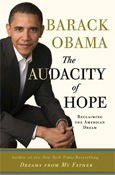
Podcast of Obama speaking at the Tattered Cover in '06 during his Audacity of Hope book tour.
Pretty incredible.
Thursday, January 15, 2009


Speaking of awesome cover art...

Gotta get my two cents in here, but on book covers rather than albums:
The publisher's (Dream Garden Press) description:
The prelude to Abbey's final novel, Hayduke Lives!, this new hardcover edition of Edward Abbey's classic includes the previously deleted chapter "Seldom Seen at Home" and features the extraordinary artistic vision of Robert Crumb. With this book, Abbey's reputation as social gadfly and maverick was indelibly forged. The characters are loose again, and the defenders of the faith better get ready! Complete with photos of Abbey and Crumb in Arches National Park and more than fifty illustrations by legendary sixties underground comix illustrator and Americon icon, R. Crumb. The Monkey Wrench Gang is a "must" for Abbey afficionados! With 12 full page illustrations and over 30 chapter head illustrations by R. Crumb.
This book was basically unavailable for the last few years but is back in circulation. Crumb's illustrations are an outstanding counterpart to the novel.
Monday, December 29, 2008
the state of book publishing...
From Marty Shepard's blog -- he runs very respectable Permanent Press out of Long Island -- www.permanentpress.com; here's his blog: www.thecockeyedpessimist.blogspot.com; AND he's considering a revision of my book (fingers crossed but I try not to get up hopes). Great take on things from someone who really gives a damn about books.
Pay for Play Book Scams
Drawing parallels between selling books and selling senatorial seats has led me to certain conclusions, since "Play for Pay" exists in both instances. When it occurs in the political realm, it creates Moral Outrage, and justly so. But when it occurs in selling books, it never causes indignation, for it's simply seen as Good Marketing. Yet, it seems to me, that anyone interested in making sure that good candidates and good books rise to the top of the charts will conclude that Pay for Play does society a disservice.Walk into any of the chain stores and you will find up-front tables and counter space filled with large displays designed to catch the eye of wandering customers. "These are the worthwhile books," is the implication. Well, perhaps that might be true on occasion, but much more often than not, these titles are prominently displayed because the publisher "pays to play," by paying money to Borders or Barnes & Noble. This is a significant expense and forecloses exposure for titles published by any small press (of which there are thousands) who, if they are lucky enough to have a book in stock at a chain store, will have it on a shelf, spine showing, under whatever category it fits into.The moral outrage frequently found in the book business usually has to do with how the chains have forced independent booksellers out of business. Or how Amazon.com has also put pressure on all bookstores. But I would like to offer a different point of view, namely applause for both Amazon.com and the independent stores for leveling the playing field, and welcoming the fact that Borders is close to bankruptcy and hoping that Barnes & Noble, which is also facing financial pressures, will not be far behind. Nothing would please me more than seeing a consumer boycott of these chains to hasten this process. It would also help restore the ailing independent bookstores that now account for less than 25% of book sales, where a few decades ago they accounted for approximately 75%.When a book buyer goes to Amazon.com and hits a button for a book they've heard about, there is no pile of up-front competing books to distract them, nor are they tempted to buy something else because Amazon always has stock of titles that are not widely known even if they are well and widely reviewed. Also, the independents--members of the American Booksellers Association--are far more likely to cater to a more demanding clientele, reflecting the taste of both owners and staff. The "Indie's" have also set up their own program to bring quality books to the public through their Indie Next List (earlier called the Book Sense Picks List)--titles chosen from pre-publication copies made available to these stores from which they select 40 books a month from the hundreds submitted.For the past 30 years we've been publishing one book each month, and in that time have earned as many honors per book as any publisher in America. Since October we've had a series of six excellent reviews in Publishers Weekly--the bible of the book business. Three were for novels already released: Roccie Hill's tale of the rock scene in the early 70's, Three Minutes on Love ("A wonderful debut"), Lucia Orth's starred review set in the Philippines, Baby Jesus Pawn Shop ("A stellar first novel"), M.F. Bloxam's eerie The Night Battles, set in Sicily ("Fine literary horror") and for three yet to come: Efrem Sigels tale of the parents reaction to the disappearance of their fourteen year old son, due out in February, The Disappearance ("A powerful and elegantly crafted novel"), Daniel Klein's The History of Now, due in March ("A charming philosophical lesson of destiny and history colliding"), and Ivan Goldman's The Barfighter, due in April ("Brings to life the sleazy underbelly of professional boxing"). You are not likely to find them in Barnes & Noble, however, for we haven't paid that piper his fee for playing. But you will be able to see them and order from Amazon.com and, perhaps, your local independent, or read about them and order directly from The Permanent Press website http://www.thepermanentpress.com/And here is my take on the economy: Last week the Federal Reserve said they would be printing money, as much as needed, to stimulate the economy. This goes beyond borrowing through bonds or from China, for why would anyone lend money to a country that is constantly increasing its astronomical deficits and whose politicians insist on tax reductions that only worsen the situation?The problem with this latest "fix" is that it's reminiscent of what happened in the Weimar Republic in Germany between the two World Wars, where printing money without real reserves led to hyper-inflation, with citizens having to take wheelbarrows full of German marks to the grocery story to buy a few bags of food. Or, more currently, the run-away inflation in Zimbabwe. This printing of money without backing-up its value is fraught with danger. If one dollar in today's currency will be valued at $500 some time in the future, it's easy for the government to pay back its loans: $200 dollars--value-wise--in today's currency would have a face-value of $100,000, an easy way to pay off debt. But it will be hell for those citizens who thought their money was safe if they put it in a bank as opposed to buying securities.One can only hope that the incoming Obama administration will do something to rectify this situation as, for all the talk about our being in recession, the fact of the matter is we seem to approaching the cusp of the next "Great Depression."Marty Shepard
Posted by the book stops here at 10:30 AM 2 comments
Labels: Pay for Play Book Scams
Sunday, December 14, 2008
Pay for Play Book Scams
Drawing parallels between selling books and selling senatorial seats has led me to certain conclusions, since "Play for Pay" exists in both instances. When it occurs in the political realm, it creates Moral Outrage, and justly so. But when it occurs in selling books, it never causes indignation, for it's simply seen as Good Marketing. Yet, it seems to me, that anyone interested in making sure that good candidates and good books rise to the top of the charts will conclude that Pay for Play does society a disservice.Walk into any of the chain stores and you will find up-front tables and counter space filled with large displays designed to catch the eye of wandering customers. "These are the worthwhile books," is the implication. Well, perhaps that might be true on occasion, but much more often than not, these titles are prominently displayed because the publisher "pays to play," by paying money to Borders or Barnes & Noble. This is a significant expense and forecloses exposure for titles published by any small press (of which there are thousands) who, if they are lucky enough to have a book in stock at a chain store, will have it on a shelf, spine showing, under whatever category it fits into.The moral outrage frequently found in the book business usually has to do with how the chains have forced independent booksellers out of business. Or how Amazon.com has also put pressure on all bookstores. But I would like to offer a different point of view, namely applause for both Amazon.com and the independent stores for leveling the playing field, and welcoming the fact that Borders is close to bankruptcy and hoping that Barnes & Noble, which is also facing financial pressures, will not be far behind. Nothing would please me more than seeing a consumer boycott of these chains to hasten this process. It would also help restore the ailing independent bookstores that now account for less than 25% of book sales, where a few decades ago they accounted for approximately 75%.When a book buyer goes to Amazon.com and hits a button for a book they've heard about, there is no pile of up-front competing books to distract them, nor are they tempted to buy something else because Amazon always has stock of titles that are not widely known even if they are well and widely reviewed. Also, the independents--members of the American Booksellers Association--are far more likely to cater to a more demanding clientele, reflecting the taste of both owners and staff. The "Indie's" have also set up their own program to bring quality books to the public through their Indie Next List (earlier called the Book Sense Picks List)--titles chosen from pre-publication copies made available to these stores from which they select 40 books a month from the hundreds submitted.For the past 30 years we've been publishing one book each month, and in that time have earned as many honors per book as any publisher in America. Since October we've had a series of six excellent reviews in Publishers Weekly--the bible of the book business. Three were for novels already released: Roccie Hill's tale of the rock scene in the early 70's, Three Minutes on Love ("A wonderful debut"), Lucia Orth's starred review set in the Philippines, Baby Jesus Pawn Shop ("A stellar first novel"), M.F. Bloxam's eerie The Night Battles, set in Sicily ("Fine literary horror") and for three yet to come: Efrem Sigels tale of the parents reaction to the disappearance of their fourteen year old son, due out in February, The Disappearance ("A powerful and elegantly crafted novel"), Daniel Klein's The History of Now, due in March ("A charming philosophical lesson of destiny and history colliding"), and Ivan Goldman's The Barfighter, due in April ("Brings to life the sleazy underbelly of professional boxing"). You are not likely to find them in Barnes & Noble, however, for we haven't paid that piper his fee for playing. But you will be able to see them and order from Amazon.com and, perhaps, your local independent, or read about them and order directly from The Permanent Press website http://www.thepermanentpress.com/And here is my take on the economy: Last week the Federal Reserve said they would be printing money, as much as needed, to stimulate the economy. This goes beyond borrowing through bonds or from China, for why would anyone lend money to a country that is constantly increasing its astronomical deficits and whose politicians insist on tax reductions that only worsen the situation?The problem with this latest "fix" is that it's reminiscent of what happened in the Weimar Republic in Germany between the two World Wars, where printing money without real reserves led to hyper-inflation, with citizens having to take wheelbarrows full of German marks to the grocery story to buy a few bags of food. Or, more currently, the run-away inflation in Zimbabwe. This printing of money without backing-up its value is fraught with danger. If one dollar in today's currency will be valued at $500 some time in the future, it's easy for the government to pay back its loans: $200 dollars--value-wise--in today's currency would have a face-value of $100,000, an easy way to pay off debt. But it will be hell for those citizens who thought their money was safe if they put it in a bank as opposed to buying securities.One can only hope that the incoming Obama administration will do something to rectify this situation as, for all the talk about our being in recession, the fact of the matter is we seem to approaching the cusp of the next "Great Depression."Marty Shepard
Posted by the book stops here at 10:30 AM 2 comments
Labels: Pay for Play Book Scams
Sunday, December 14, 2008
Tuesday, December 16, 2008
On getting back from beyond
This is a view I hope to experience only this way, through my laptop window to a big scary world of hoping your trusty avalanche beacon will help your friends dig out your remains, with their trusty avalanche shovels and probes.
[Avalanche in Pau, by an organization listed only as the "Snow Safety Center"]
Think you know how to avoid the rush, and crush of an avalanche? Here's a terrain quiz, from csac.org.
Want to know more? The Silverton Avalanche School started enrollment for their 2009 classes today. According to the website, there are still open slots.
Can't wait to start learning more? Here is a reading list, suggested by the folks at the Avalanche School. Shop indie, and find your bookstore here.
Can't wait to get started? Check the Colorado Avalanche Information Center for snow conditions, before you pack that gear and hit the backcountry, beyond the beacons and safety nets.
Welcome back to winter, gang.
Think you know how to avoid the rush, and crush of an avalanche? Here's a terrain quiz, from csac.org.
Want to know more? The Silverton Avalanche School started enrollment for their 2009 classes today. According to the website, there are still open slots.
Can't wait to start learning more? Here is a reading list, suggested by the folks at the Avalanche School. Shop indie, and find your bookstore here.
Can't wait to get started? Check the Colorado Avalanche Information Center for snow conditions, before you pack that gear and hit the backcountry, beyond the beacons and safety nets.
Welcome back to winter, gang.
Friday, December 5, 2008
Craig Childs defends the modern forager
 I've never been one to try to keep up with the Joneses. I just wait for them to have a yard sale.
As a long-time bum (fishing, ski, van, river, desert, mountain, etc. etc.), I've found there are few things in life that are worth acquiring new. And that there are many, many ways -- many underground economies, and even many sources of free pickings -- to get goods that are plenty good. And cheap.
Which is important when you have built your life around living in the hinterlands of the American West, and around building the time in that life -- generally (at least in my case) at the expense of a more abundant income -- to get out and enjoy it.
Want less; do more. Know what I mean?
Hotchkiss, Colo.-based writer Craig Childs (author of the excellent and engaging House of Rain) knows what I mean. And he waxes philosophic about it -- his own and others' adventures in 21st century scavenging -- in a recent column in the LA Times.
Read Craig Childs' "Man as Scavenger." Then raise a tin-cup toast to hunting and gathering in the modern world!
Tuesday, December 2, 2008
Best Novel of the Year

Time Magazine just named 2666 the Best Book of the Year. I would argue that it's the most important piece of fiction to come out in the last 50 years... which is just a large blanket statement designed for impact... a statement for which I have no argument or proof.
It's virtually impossible to describe this book. I can say that you haven't heard from me in a while because of it, I've been so immersed and so traumatized by it that my dreams have been infected, and I see visions of unnameable and indescribable...discomfort. There are 5 stories, all loosely connected to the enormous number of rape/murders that remain unsolved in the bordertown of Santa Teresa in the Sonoran Desert. Hundreds and hundreds of women have been brutally tortured and murdered without respite for the last decade and a half. The crimes remain unsolved.
Bolano dances around the issue in the first three parts of the book, but part four... part four. Each woman killed, how she was found, who she was, what they did to her. It's awful. He names them, describes them, and humanizes them enough in a paragraph or two to make each one devastating. the sheer number of them, though, no matter how well we know them, or how personal it gets, we just cannot remember them, and therein lies the genius of this section. Each becomes part of a faceless mob of corpses, and they just keep coming. This is why nothing has been done, Bolano seems to be saying. The sheer overwhelming numbers almost makes each death meaningless in the face of the bigger atrocities.
By no means an easy read, but as Kafka says:
"If the book we are reading does not wake us, as with a fist hammering on our skulls, then why do we read it? Good God, we also would be happy if we had no books and such books that make us happy we could, if need be, write ourselves. What we must have are those books that come on us like ill fortune, like the death of one we love better than ourselves, like suicide. A book must be an ice axe to break the sea frozen inside us."
Wednesday, November 19, 2008
Here's a Bit About Breaking the Silence:

Sexual Assault Services Organization (SASO) of Durango has just released their collection of poetry and art of survivors of sexual violence.
This is a really well done and very intimate collection from local women that speaks to the hope that comes from healing, or maybe the healing that comes from hope.
$10. Maria's. All proceeds go to SASO.
Friday, November 14, 2008
I've just seen Mark Twain!


The Cortez Cultural Center has sponsored two sold out performances of Dennis Seibel’s "An Evening with Mark Twain" but unlike the promise of Halley’s Comet, the public won’t have to wait 76 years for its next appearance.
Rumor has it that Seibel will return at the end of January.
I just came back from an hour with both men (professionally folded into one) and if you have to drive from Missouri just to see him, do it.
For $6 (kids prices are discounted) you can step back a hundred years and listen to the most original and best stand-up comedy America has ever produced. The material is suitable for all ages, timeless as Twain’s writing.
Call the Cortez Cultural Center (25 North Market, Cortez) for reservations: 970-565-1151.
31 people have already signed the waiting list and the exact date has yet to be set.
Subscribe to:
Posts (Atom)