Thursday, September 17, 2009

Get more culture for less at Walmart ...

I admit it: Every now and then, I go over to the dark side.

It is, after all, only a few miles from my house.

I mean, of course, the Box Store That Must Not Be Named. What you might call, if you were, say, a wizard, Valdemart.

Yes, I too loathe Walmart. I don't need a reason -- it's just reflexive. But at the same time, I must admit it holds this lurid allure for me. It's kind of like going to, say, a bull-fighting match -- I disagree with it, yet it is this fascinating cultural phenomenon that the traveler in me could not resist witnessing, exploring.

If you can enter that traveler's mind of the Prime Directive -- observe, experience, but don't judge -- then Walmart really can be its own peculiar cultural foray. Even right here in little Durango, pop. about 15,000. For when I walk around my little town's big Walmart, I can't help but walk around, gawking around, and mouth agape, wondering, "Who the hell are all you people?!?"

I mean, I live here, in a very small town, and have for so long that it seems that generally where ever I go I know at least a good chuck of the other folks there. But not so at Walmart. It's like a five-minute drive delivers me to this completely different planet, and a whole different culture. A whole little different country in a box down the road.

Most of that, of course, is the Box Store Culture itself. I mean the sterility and organization and predictability, the endless shit and sense of shameless consumer gluttony, and the routine familiarity -- the sense that every Walmart everywhere is a clone of some great Mother Of All Walmarts. And, of course, is generally what Walmart is so scorned for: for being devoid of culture, for even sucking away any trace of the variety that comprises culture and cultural differences.

Perhaps. But I'll give it this: At our Walmart you can get see fresh roasted chilies outside.

Take a little Walmart cultural trip for yourself: Check out this list from Seth's Blog of 11 observations made from a visit to a Walmart in China. His first four on the list are:

1. They sell live turtles.

2. A whole display case is devoted to sea cucumbers.

3. Like any upscale American or Beijing supermarket, they have a sushi case. The prices are half what they’d be in America, but the pieces of fish are much thinner.


4. They cut up meat in front of you. A whole pig was being butchered on a table. A roast duck was being sliced for packaging.


Also below is a slideshow of a visit to a Walmart in Beijing -- complete with the ubiquitous "More for Less" signs in kanji, but also featuring live turtles and carp -- killed and cleaned while you wait -- in the meat department.


How about you: Seen any other signs of local culture while traveling Walmarts around the world?

(via BoingBoing)

Wednesday, September 16, 2009

Aspen season

Ed Quillen, columnist for the Denver Post and publisher of the very fun Colorado Central Magazine, has a nice little post on the High Country News Goat Blog. In the post, he gives a great little nutshell natural history of the Aspen, including its tendency to turn yellow in the fall.

Actually, Ed informs, an aspen's leaves are always yellow, or even orange -- they just look green in the summer from the chlorophyll activity. So in the autumn the trees are merely proudly sporting their true colors.

For which we are all most thankful.

Read that and more cool facts about aspen in Quillen's post here.

Tuesday, September 15, 2009

Today's forecast ...

In the pre-dawn morning, the moon floated luminescent above the pink morning glow like God's flung nailclipping. A lovely morning, warm yet sharp, rich with moisture from last night's rain, and clear and fair overhead.

Still, forecasts in the newspaper and online called for the potential of rain later.

Perhaps so. For walking above Durango later that morning, I could see news from the the real weathermen: The La Platas casting their own forecast for last today on the horizon, like nature's RSS feed in the great homepage of the sky.

Sunday, September 13, 2009

Autumn in the air ...

Matt pointed it out to me.

"Decaying foliage is the smell of fall in New England," he posited, authoritatively.

Although we'd both spent more than half our lives in the West, we are both indelibly conditioned by our northeastern upbringings. And as such, both share an affection for that falling, ending, last-savoring season that bridges the vibrance of summer and the sterility of winter.

"And roasting chilies is the smell of fall in the Southwest," he sermonized, concluding.

And with the rich smoke rolling over us from the two chilie roasters roaring away, I noted through that savory haze the vague hint of emerging pattern of re-coloring foliage appearing on the oak-covered flanks of Smelter Mountain and Perins Peak, and I bowed to my friend's good observation.

Saturday, September 12, 2009

Swirling in the Farmers Market social eddy ...

Spent the morning at the weekly Durango Farmers Market today. I was down there with my friend Matt, and we were representing Backcountry Hunters and Anglers at a table with some folks from Colorado Wild. We were giving out info to visitors to the market about roadless areas in Colorado, and urging people to urge Governor Ritter to make the Colorado Roadless Rule at least as strong as the Clinton Roadless Rule.

Learn more about the issue here.

But that's not what I want to write about here. What struck me the most about this day was the farmers market itself. And Durango itself.

It was a lovely morning, with a slight cool bite to the air early on ("That is a whisper," a friend whispered to me this morning. "It's winter whispering, 'I'm com-ming ...'" He grinned, big and happy ...). By mid-day it had given way to shorts-worthy heat -- the typical southern Rocky fall regimen kicking in.

And people were out en masse. The market -- set in two adjacent strips of First National Bank parking lots -- was like a big, swirling eddy. And everybody was happy and convivial and just loving the day. Part of 8th Street just up from the market was closed for the Durango Coffee Festival, and live music rolled out over both venues as people strolled and pushed strollers and biked and sauntered around between the two.

Downtown Durango was alive, and at its tribal, social, communal best early on this lovely late summer day. My parents were in town and I was glad they were able to enjoy it with us.

And that was the perfect place for me to be, it seemed. Always good to be able to evangelize on a street corner, of course -- but beyond that, it was three hours or more of running into friends and neighbors and co-workers and former co-workers and old friends and forgotten acquaintances and old students and meeting some tourists and several new Durangotans who I hadn't yet bumped up against in the great ecosystem that is Durango.

It was fun in the sun and sharing and chatting (and a few cups of good coffee), and it showcased some of the great features of Durango, and of mountain-town life in general: the engagement, the involvement, the caring, the out-of-doors living, the social fabric, the festivarian spirit, the endless swirling and entwining and renewing of relationships.

For us, it was certainly an easy place to push an idea like defending Colorado's roadless areas -- to people who care about their town, their community, their place. People who live somewhere because they want to live there.

Mountain-town people.

Monday, September 7, 2009

The view from Hermosa Cliffs

What a welcome few days. Cool and damp. It reminds me of Norway, and the Yukon, and Alaska -- places we ventured the past few summers, where the summers are, well, cool and damp ... I'm a temperate-zone kinda guy, so for me there are few things as lovely as a damp view of mountains shrouded in togas of cloud.

So, following a summer with with our own climatological recession underway -- a lack of those refreshing monsoonal flows that usually move over the region in the late summer -- the past few days have been a welcome infusion of wet, temperate weather.

So after Saturday's all-night rain, we headed up to the hills to check out our mountains wrapped in moisture.

Here's a view from the top of the Hermosa Cliffs. Makes me glad we didn't head anywhere else this year. (Click to enlarge.)

Thursday, September 3, 2009

Silence is golden? Or is it dangerous?

So I was listening to the classic rock station the other day, and, as happens once or twice or six times an hour, the Eagles came on. This was one I hadn't heard in a while, and one I like more than many, both a '70s mainstay and a mountain-town mantra: "The Last Resort," with its prophetic refrain:

They call it paradise
I don't know why.
You call someplace paradise
kiss it goodbye.

That was true, back in the 70s, I think -- that you could, and should, hunker down and shush up about the still remote and un-marketed places scattered around rapidly growing country, and world. I think that was mostly a good strategy.

Maybe.

Hell, I don't know. Back then I was working in Boston (the one in Massachusetts, as Don Henley might sing ...) and found out that if you call someplace a center of industry, you can kiss it goodbye as well. (The called it the Massachusetts Miracle, actually, and it consumed the rural New England village life and countryside in a broad swath of suburban/pavement/industrial devastation around the Boston area.)

I wasn't out here in the relatively wild and fully wonderful West. Yet. And when I finally came, I stayed. I'd found my personal paradise. And I, of course, wasn't going to leave.

And I, of course, wasn't alone.

The West was, is, always has been and always will be lots of people's Paradise. How can you blame'em? I don't blame myself for staking a claim on and making a life in the place I consider the closest I am likely to get to paradise in this here life-cycle go-around. For myself, anyway.

And for others as well.

But for whom?

Now there's a hard question. And here's another: Call some place paradise, does it have to therefore be kissed goodbye?

And in our 21st-century 7-billion-strong Google-Earthed world, does calling someplace paradise perhaps actually help keep it from being kissed goodbye?

I think maybe so. I think we need today more advocates to go along with the activists fighting for our paradises. More people who know places and can articulate why they should be kept and protected and cared for, more people on the ground in places, seeing, looking, listening, like lovers watching over their beloved.

As the Eagles also sing:

There is no more new frontier.
We have got to make it here.

I think we need more people actually making a living somewhere they love -- and living in a way that doesn't devour their beloved place.

And more speaking speaking from that place, and those lives.

We can't afford to only fight against any more. We must fight for things. And to do that, we have to stand up and argue for paradise.

Advocates.

What do you think?

*****

Editor Will Sands takes a look at the same question on last week's editorial in the Durango Telegraph. Read his take on the matter here.


Monday, August 24, 2009

Reservoir dogs: of Navajo and Nighthorse

Someone called it "the New Mexican mating ritual."

There were nine of us sitting on a cliff overlooking an arm of Navajo Reservoir. We jumped fromthe cliffs and swam and just sat gazing out over the flooded canyon filled with blue water, the rounded and crumbling tan sandstone cliffs dotted with pinion and juniper, watching the clouds float above and the boats play below.

It was the last day of the summer for our gaggle of teens, and so, as has been our ritual the last few years, we packed up and headed south for the cool and clear impounded waters of New Mexico's northernmost so-called "lake."

That's when a jet ski driven by a big guy, with a girl with a pennant of brunette hair flying behind and her arms wrapped around the driver's ample waist, buzzing loudly up and down the channel in front of our band of rocks, decelerated and turned into our little cove.

He stopped his machine somewhere on a rock shelf somewhere below us, out of sight. Then he shot loudly out back into sight -- minus his girlfriend -- and proceeded to put on a screaming, splashy display of sharp turns and jumps and spins on his manly machine right in front of us. For the amusement of his girlfriend? To impress her? Or, as someone sharply pointed out, perhaps as some sort of homo motorus mating dance?

Whatever it was, it was damned silly. And loud. And somewhat annoying, even if amusing.

But that is the nature of Navajo Reservoir. It is 35 miles of the San Juan River (plus arms up the Pine and Piedra rivers) flooded and given over to water-borne motorsports in the arid Four Corners highlands.

Yes, despite my personal aversion to big-ass water projects, even we can appreciate coming down here for the cool respite of the lake its cliff jumping and scenery. And I can even enjoy the motorhead wildlife watching, as big, expensive boats circle the busy lake aimlessly over and over and over ...

That's fine. But here's a proposal: How about making Lake Nighthorse -- the reservoir filling Ridges Basin for the Animas-La Plata project -- a lake for non-motorized recreation?

Already in the Four Corners, the major reservoirs backed up behind the region's big dams -- Navajo, McPhee, Glen Canyon, and Vallecito, in particular -- have been given over to the water-machine culture.

So, how about water recreation for those who seek quiet, and peace, and human-powered enjoyment of lakes?

Ridges Basin is perfect: It is surrounded by what's left of the Bodo Wildlife Area, sacrificed for the Animas-La Plata Project -- and originally deeded by the Bodo family to remain forever wild for wildlife) -- and so, despite the travesty of the condemning and destroying of the heart of the wildlife area, would still honor the place and the intent of its creation.

And, I believe, as the only lake set aside for peace and quiet and paddling and rowing, it would become a big tourist draw for the Durango area. The motorheads have plenty of other places to go -- all those once wild canyons now submerged.

Let's have a place for that, even after flooding, still honors that peace. And those of us who seek quiet.

After all, we need places for our mating rituals, too.

Thursday, August 20, 2009

Floating the San Juan in August ...

... is like taking a slow boat to Utah. Or, uh, in Utah. Through Utah?

Well, whatever it is, is certainly is slow. Especially this year, when our annual dose of welcome monsoonal weather has failed to materialize over the Four Corners.

Last weekend, I got to do five days on the lower San Juan -- Mexican Hat to Clay Hills -- with some folks I've never been down with before. Some I've known, some I met there. Some who've been down the San Juan before, some for whom it was their first visit.

Some Augusts at this time of year, the river can be in the thousands of cfs. And there can be floods and fluctuations in that flow. A few years ago, we were on the San Juan at the end of summer, when over night the flow bulged. We went to bed with the river a stately 1,000 cfs, and awoke to a bullying 10,000 cfs in the morning. It stole our groover and a bunch of gear, too, but this was a thief in the night, and there was nothing we could do about it. We were fortunate we'd tied our boats high and securely.

Not so last week, though. Last week we found the river slow and gaunt -- a mere 500ish, with its skin hanging off as wide beaches and long sandbars, and its bones showing through in rocky rapids and bouldery midstream obstacles.

Case in point: I humbly admit I suffered my first-time-ever wrap in Government Rapid -- usually an all-bark/no-bite class II bit of splashy water. This year it was a sieve of boulders, a sandstone net that snagged my cataraft like a rabbit in a snare.

I bowed humbly to the river as we tugged and low-sided and tried to pry and finally got roped off the rock. The river this year seems determined to remind me to always be respectful ...

Aside from that, though, our float time consisted of mainly long, lazy days on the water. On the second day we floated for 17 miles -- which took us a good 10 hours. And what did we do in those 10 hours -- and all the other hours we spent on the slow boat ... across? ... Utah over five days?

Talked. Sat silent. Looked. Smelled. Felt. Thought. Didn't thought. Rowed. Didn't row. Did nothing. Drank warm cheap beer. Which was everything we set out to do.

But isn't that the San Juan River? As staggering a landscape as the canyon of the San Juan is -- with its crumbling-layer-cake limestone ledges and cliffs, its herds of Bighorn sheep, its sprawling sandy campsites, it's fantasmagorical sidecanyon hikes, and its opportunity for day upon day upon night upon another day of such beauty -- it isn't all that popular. We saw two other parties on the river, and it turned out I knew one of them.

The reason, I believe, is that the San Juan doesn't offer big whitewater, which deters most folks, given its remoteness and long shuttle (the 56-mile lower, Mexican Hat to Clay Hills, section, anyway). It's slow. And so, for mst, especially younger, more adreline-addicted younger river runners, there's nothing there.

They're wrong. Everything is there.

Everything for us, anyway. For our kind. Because with its slow, sweltering loveliness, the San Juan is a river for poets and drunks (two traits that, in my experience, are often correlated). Not loud, hammering, sloppy, sotty drunks -- but philosophical, pagan, playful, active, convivial drinkers. Like us.

And families. And both other parties we saw, including ours, were parents with kids. Fellow San Juanistas.

Slow floating down the San Juan suits me. It suits me and all those fellow San Juanistas. Enough said. And it suited this band of companions brought together for this particular trip this particular time down this, the Four Corners' family river.

Gathered on our slow boats to through over across in around and within our kind of place.

Check out more pics from the San Juan here:

Monday, August 10, 2009

The Great Animas River Afternoon Urban Expedition

Alright, it wasn't exactly an expedition. And it wasn't quite "great" maybe in scope or ambition or epic-ness.

But it was just an afternoon, and it was urban, and it was just our everyday downtown Animas River.

And it was "great" in the everyday sense of very much fun.

Yesterday a small gathering of us townies rallied a run through downtown Durango, down the low-flowing Animas, to get out of the heat, away from chores, and onto the river. Even if it was just a 200-cfs trickle. And even if it was just through town.

What at bigger flows is a quick hour-long blast north to south through town -- 29th Street put-in to the old saw mill site -- took us three hours. Lots of float time, but lots of rock maneuvering and narrow chute paddling, too. The low water also gave us a chance to study the bone structure of what are whitewater sections at higher water.

We certainly weren't alone, either. Tubers, anglers, swimmers, sunbathers, beer drinkers, squirt boaters were out there in our downtown playground. And even a forlorn-looking family of four passed by on a big commercial raft, threading the rocks and revelers while their guide earnestly regaled with them with Durango history on their "two-hour whitewater adventure."

That it wasn't. But it was, as we set out to find, good, recharging, time on the water, with friends, right in our own town.

This, too, is a big part of what our kids will remember about their growing up in Duranago -- summers days spent bobbing the Animas in tubes and duckies. And with all the rest of us who love and appreciate our little mountain river through town.

Check out more views of Durango from waterline here:

Thursday, June 18, 2009

Four guiding precepts for environmentalists

Dave Foreman's recent "Around the Campfire" post starts a bit melancholy: He laments the passing of several noted environmental activists, including Congressman John Seiberling, deep ecologist Arne Naess, biologists Dave Maehr, river conservationist Pete Lavigne, and others.

Foreman saves his greatest eulogy, though, for Clif Merritt. "Clif is likely not well known to conservationists these days," Foreman says, "but I wouldn’t shy from putting him on the list of the top half-dozen wilderness heroes of the twentieth century."

Merritt, who passed at 89, was director of The Wilderness Society’s western regional office in Denver in the 1960s and through the 1970s, and was a formidable Wilderness advocate.

And Merritt was the one who taught Foreman four rules for environmentalists that Foreman says changed his life and his activism for ever. And stand as excellent guidelines for all of us who care about wildness and wilderness to be reminded of today.

Those four precepts, according to Foreman, are:
First is that the real work of conservation is to shield wild places with clear boundaries, solid rules, and enforcement. In the United States at least, Wilderness Area designation is the best way to do that.

Second is that the heart of conservation is made up of citizen conservationists. Conservation is a family of Nature lovers, not an assortment of institutions. Clif always told us Wilderness Society reps to strengthen independent local and state wilderness groups, to give credit to citizen volunteers and local groups, and to not elbow them out of the way to claim accomplishments for The Wilderness Society or any other big national group. We could lead but were not to hog the limelight.

Third is to ask for and work for what we want, what is needed, what is right, and not to accept what is offered us or what we are told is “reasonable” or “practical.” We are advocates for wild things; we are not politicians juggling interest groups with an eye to the next election. In the 1970s, Clif led against watered-down alternatives to Wilderness Areas such as “backcountry” and a lesser kind of wilderness for Eastern national forests.

Fourth is to have a vision. Since the days when he worked for passage of the Wilderness Act, Clif was carried along by vision. By looking ahead for the big picture, he was ready to head off on new paths that beckoned—for example, he jumped onto the idea of wildlife linkages between Wilderness Areas in 1993, just after The Wildlands Project began to push them. From a practical standpoint, we gain far more when we strive for a vision.
It's pretty easy to see, I think, how these compass bearings guided Foreman in his long career from Earth First!, to the Wildlands Project, and now with the Rewilding Project.

How might they live past Clif Merritt -- and even the Dave Foreman's of the world -- to guide the next guardians of the wild?

"The best way for us to honor this wise, dedicated, and charmingly odd man," concludes Foreman, "is to think about his four lessons, guide our work by them, and insist that conservation groups big and small get back to following them."

And to give those vision life in our own individual actions. And lives.

******

Read about Clif Merritt here.

Visit the Rewilding Project here.

Read and subscribe to Dave Foreman's "Around the Campfire" here.


Monday, June 15, 2009

Hanging with the Wild Hunters

I had the pleasure Friday night to sit around the campfire with some of my heroes: The hunters and fishermen who run the Colorado chapter of Backcountry Hunters and Anglers.

Backcountry Hunters and Anglers is a national organization founded in 2004 that has filled a void and closed a schism in the battle to protect wild country: It finally gives sportsmen and sportswomen a place to unite in the defense of wildness and wilderness, but in the name of hunting and fishing. Prior to this group, so-called "environmentalists" and wilderness defenders were perceived as being in opposition to sportsmen, and vice versa.

Even though hunters and fishermen standing up for wild habitat is a tradition that can be traced back to Teddy Roosevelt and earlier, for generations this natural alliance has been kept severed by the generally ideologically (an also illogically) anti-wilderness stance of traditional "sportsmen" groups. And traditional "environmental" groups maintained a leeriness of hunters and fishermen, largely because of the reactionary pro-motorized and mechanized "sporting" mindset maintained by those industry-backed so-called "sportsmen" groups.

Enter BHA. Here is a group that argues -- eloquently and fervently -- that hunting and fishing need big, healthy, roadless wilderness and wild country. And that it's needed not just for the wildlife that is the object of their woodsmen passions, but also for the health and spirit of those hunters and fishermen themselves.

The group, then, takes some surprising -- and welcome -- stances that stand in stark opposition to the industry-co-opted sportsmen organizations and publications:
  • That hunting and fishing are activities enjoyed by both men and women.
  • That non-motorized, human-powered, low-tech ways of getting around and doing that hunting and fishing is better and healthier for both the land and the people out on it.
  • That these places and traditions need to be preserved not just for today, but for future generations. Toward that end, BHA has a strong componnet of education and family that is meant to reintroduce the values of hunting and fishing to America's youth.
Good people doing good work.

And there was no better place to get to meet and talk with these good people than around a campfire and under the stars of a lovely San Juan Mountain night.

Below is a profile I wrote of the group when it first organized.
Solitude. Tradition. Challenge. Freedom. Health. Family.

Now there’s a list, eh? And how do you come by those good things?

By hunting and fishing in big, wild, open spaces, according to the vision of a new sort of environmental group. Or a new sort of hunting organization. Or a new kind of fishing advocacy club. Or whatever it is, for unlike any other kind of pro-wilderness coalition out there, Backcountry Hunters and Anglers is all those things.

“Backcountry Hunters and Anglers is dedicated to quality and ethical hunting and fishing opportunities in the wildlands of North America, and the aggressive protection of wilderness and other backcountry habitat for fish and wildlife, upon which these great traditions depend,” states the group’s proclamation.

Their statement continues: “We are dedicated hunters and anglers who cherish the peace, solitude and challenge of the backcountry experience. As hunters and anglers, we know that our continued enjoyment of these traditions is dependent upon the protection and enhancement of a healthy environment.”

“At no other time in history have our traditions been threatened like they are today,” the message concludes.

Those “threats” to those traditions and the backcountry they require include the federal government’s recent rescission of protection for the country’s last 58 million acres of roadless land outside of Wilderness Areas. Roadless areas are vital habitat for large animals such as elk and bear, as well as providing essential native trout fisheries. The effects of roads -- even small logging roads and ATVs trails – and the access they cut into backcountry areas include increased human visitation and impacts, stress and altered natural behavior for wildlife, stream sedimentation, engine noise, access for poachers, and the spreading of noxious plants. Roads also disqualify areas from future Wilderness designation.

To counter those threats, BHA aggressively supports roadless area protection and Wilderness Area designation. It also, though, goes beyond these issues to also advocate for the reintroduction of predators such as wolves where viable, off-road vehicle restrictions, and minimizing technology for hunting and fishing -- all stances that stand in direct opposition to the messages conveyed in most modern mainstream hunting and fishing media, where wilderness “locks up” the land, roadless areas prohibit access to backcountry, predators steal “our” game, and ORVs and technology give you the edge up on those wily animals (while providing big advertising dollars in those glossy sportsman magazines).

It’s a radical approach, then, uniting hunters and anglers by promoting the protection of wild country and healthy ecosystems. The key rallying point is a shared valuing of tradition: renouncing motors and gadgets in favor of muscle and mind in pursuit of game. But it’s not a new philosophy, argues BCA co-founder and chairman Mike Beagle.

“It’s the freedom to hunt and fish in solitude, without urban excesses, and with challenge,” he explains. “It’s an old-fashioned way of doing things, that says it’s demeaning to wildlife to use technology to show our mastery over wildlife.”

Beagle, a former army officer, high school teacher, and football coach living in Oregon, refers back to Teddy Roosevelt when he talks about “the doctrine of the strenuous life”-- getting yourself in and out of the backcountry by your own power, and meeting your prey on their turf and level. All it requires is leaving the land alone, and leaving the toys at home. Which, of course, would also keep many of the motor-and-technology-dependent so-called hunters and fishermen at home, too. Like it used to be.

So that’s the solitude, tradition, challenge, and freedom parts. From that, the health and family benefits of low-tech adventuring in motor-free backcountry are gravy, says Beagle. “There’s also the added value of it being great for families. Real ‘family values.’ And it doesn’t cost like a theme park. All we have to do to get into it is sweat. We have to earn it. And even at a young age, kids understand the idea of earning it.”

“We just have to protect the solitude and challenging environments, by educating hunters and anglers about wild habitat,” he says, summarizing BHA’s approach. “We’re not against anything – we’re for things.”

Holly Endersby agrees.

“I joined because there wasn’t another organization out there that shared my values,” says Endersby, an Idaho-based outdoors writer, horsewoman, hunter, and angler. “All the rest were us-against-them groups.”

BHA, she says, appealed to her because of “their unique stress on protecting wild public country” and “a value that has lost its hold in the last few years – that killing should not be easy.”

“It’s important to me to get my own food,” explains Endersby, who also has become a member of the BHA board of directors. She says that she and her husband live on wild game, including elk, deer, bear, upland birds, and fish.

“It’s a privilege to hunt and take animals,” she says, “and when you work hard for something, you value it more.”

She and her husband frequently practice their traditional-style stalking in the nearby Frank Church River of No Return Wilderness, in Idaho. It is this place that also taught her that “our public lands are every citizen’s gift,” she says, adding that she considers it “a civic duty to take care of them.”

“Most other hunting groups don’t address that, or defend that,” she complains.

Endersby also defines that “killing should not be easy” edict as non-technological hunting and angling. But weapon-wise, what defines “technological” or what level of technology is too much is an issue that needs to be put aside here in favor of unifying over keeping the hunt itself as primitive as possible.

“It’s those senses – a consideration of the needs and honor of the animals, the land, and the hunt itself – that puts BHA in a category all by itself,” summarizes David Petersen, the Durango, Colo.-based author and hunting ethicist whose books inspired the group according to Beagle. “A group embodying the best of the middle ground of common sense, decency, intelligence, and respect. A group that’s not just about rights, but also is promoting respect, responsibility, and resource protection.”

“Backcountry Hunters and Anglers embodies all the things hunters and anglers should become,” he says. He then adds pointedly, “And all the things we must become in order to continue doing what we love.”
Learn more about Backcountry Hunters and Anglers here.

Learn about the Colorado chapter of BHA here.

Friday, June 12, 2009

Skiing that San Juan dirt-snow

Well all know about it: those crazy, hazy dust storms that swept across the Four Corners this spring. Seems that southern Utah and northern Arizona was scoured down with this Spring's winds, carried across the Colorado Plateau, and deposited on the spring snowpack sitting on the flanks of the Rockies -- and particularly the San Juan Mountains.

It also seems that these dark layers dusted over the snowpack -- we Westerners' alpine-stored water supply for the dry Summer months ahead -- also speeded up the snowmelt. By darkening the snowpack and lowering its albedo, the snowpack absorbed more solar radiation and so delivered its peak runoff weeks early.

And it seems the people who prognosticate on such things are predicting more of the same dirt-to-dust-to-snowmelt in the years ahead.

The New York Times ran a good article on the phenomenon a few weeks ago. The article, published May 14, says:

Snowpacks from the San Juan Mountains to the Front Range have either completely melted or will be gone within the next two weeks, said Tom Painter, director of the Snow Optics Laboratory at the University of Utah and a leading expert on snowmelt.

The rapid melting is linked to a spate of intense dust storms that kick up dirt and sand that in turn are deposited on snow-topped mountains. The dust darkens the snow, allowing the surface to absorb more heat from the sun. This warms the snow -- and the air above it -- significantly, studies show.

The problem has been particularly acute in the semiarid Colorado Plateau region encompassing parts of Utah, Colorado, New Mexico and Arizona. An unprecedented 12 large dust storms have occurred so far this year in the region, and at least two more are projected in the coming months, officials say.


The article also says there has already been twice as much dust generated this year than in the past six years.

That, to me -- even though I, too, recognized something weird going -- seems like a hard thing to quantify.


But, I must say, after a late-spring ski venture up into the San Juan high country recently, I am a convert to the idea that, this year at least, something truly peculiar hath descended upon our mountain domain.


As a side note, this trip was also my teen kids', and one of their friend's, first backcountry ski venture. (We're already getting them fired up for next year.) We headed up early one morning to Cinnamon Pass, east of Silverton. It was a great spot for their inaugural snowfield-skiing experience -- a quick 15-minute climb rewarded by a fast, fun, steep descent down. We got in two runs before the weird-as-the-dust-storms stormy weather moved in, packing its winds, cold, sleet, and lightning.


But two runs was enough to full hook these ski-bum kids.


And it was also enough to see first-hand the effects the Spring's dust storms had wreaked on the high-country snow. Looking out over the ragged ranges of peaks, both nearby and far away, you could clearly see -- startlingly see -- the line of red dust painting the snow-covered slopes, fading to a thinner pink as you got higher. It's a truly bizarre and dumbfounding sight.


And the effect was also clear close-at-hand: although our skiing was fast and fun, it was also across gritty, rust-colored corn snow.


If this is what's to come, then maybe it's time to turn those rock skis into dirt skis.


See more pics of both the ski and the dirty San Juans below.


Wednesday, June 10, 2009

Paper or plastic? UN says it shouldn't be a choice

The director of the United Nations Environment Program on Monday urged countries around the world to ban single-use plastic shopping bags. The announcement follows a report from the program that identified these sources cheap and ubiquitous plastic as the most common pollutant plaguing and choking the world's oceans.

And, as anyone who boats or hikes near towns, our own Four Corners chaparral, arroyos, and riversides.

Mongabay.com reports that "the plastic problem is so bad that a floating island of plastic debris has been discovered in the northern Pacific which is double the size of the United States."

China and Bangladesh have already banned plastic bags, and Ireland has imposed a fee on plastic bags that have reduced use by 90 percent, the article says. In the United States, "San Francisco is the only city to ban plastic bags, although Los Angeles will have a ban in place next year. New York City rejected such a fee on bags last year, but Washington D.C. is considering a 5-cent-fee this week."

An excellent -- and frightening -- article on the effects of plastics in the oceans ran in the May/June 2007 issue of Orion Magazine. Read that here.

Tuesday, June 9, 2009

Four days on the San Juan

It was about damn time. To get on the river, I mean.

Late, even: Last year we were on the Dolores in April and May, and the San Juan by late May. But this year, very little Dolores River, and no San Juan permit forthcoming on first application from the Bureau of Land Management (overseer of the San Juan in southeastern Utah).

But our friend Matt managed to snag a cancellation on the San Juan for the first week of June, and by then we were all damn near rabid to get on the river. Sure, it wasn't our usual week-ish run down the length of the lower San Juan, and instead was just a little 24-mile Bluff-to-Mexican Hat jaunt. But, hey, we'll take it. So we took it.


So we dragged our allotted river miles out over four days, and had a lot of beach time and hiking, checking out places we hadn't been for a while or ever: Riverhouse Ruin, Chinle Wash, wanderings around Eight Foot Rapid. A good pace: dead slow. And good company: lively and engaging.

And a good trip. And, as I said, as needed as an annual chimney sweep -- scrubbing away the mental ash and spiritual clogging from the working winter season.

Notes:

-- This was JUNE? Cloudy and a gritty wind and chilly much of the time, and sunny and breezy and chilly the rest of the time.

-- Kids took their own boat. Start of things to come ... ?

See some pics below.


Wednesday, June 3, 2009

A happy Four Corners New Year!

Pardon me if I've been away, but I just got back from my New Year's celebration.

See, my New Year falls in mid-May, and lasts a little more than week. And every year its comprised of the same series of rituals plotted along the same itinerary: A circuit tour of the Four Corners, with some 25 or 30 people in tow, doing service work and visiting local landmarks while studying the region's past and present.

In my life, once a year this excursion is a sacred ceremony, a sort of walkabout by fifteen-passenger van. And it gives me a chance to set up my stance, my attitude, and to plot my approach and strategy and goals for the upcoming summer and year ahead.

I always leave this trip purged and redirected and revitalized. And exhausted.


Some background: The trip is organized by an education-travel company that does most of its trips in Latin America and overseas. This is one of their few domestic-travel programs, and it was put together specifically for a single group: A private school in San Francisco. Every year the graduating two-dozen or so from the 8th grade class, soon to be launched into a variety of high schools after many of them had been together for their entire scholastic careers, comes en masse to, sort of, well, travel abroad in their own county.

And every year it's a mind-expanding, eye-opening, spirit-spreading venture. For all of us.

The kids get a sort of smorgasbord sampling of the variety of people, places, and activities the Four Corners have to offer. They raft in Durango, wander Silverton, walk Cortez, and dance in the Bear Dance in Ignacio. They work with the Forest Service in the mountains and with Ute Mountain rangers in the backcountry of the Ute Mountain Tribal Park. They get talks from a Four Corners historian, BLM archaeologists, and Southern Ute tribal officers.

My role is part organizer, part regional public relations, and while the trip is on, full-time local guide. I get paid to do this trip, sure. But it's not the wage that makes me blot out a week each spring to cavort with 24 hormonal urban adolescents. I figure that, given it's 24/7 for seven days, plus prepping and wrap-up, I make only a few bucks and some odd cents per hour.

But for me it's the best below-minimum-wage job I've ever found.

Because for me, this foray into what's right around our home works as a pilgrimage into theme, into place, into my place and its people -- my personal passions. And it provides the space (even if it's often a rather loud, hectic, demanding space) to reassess my connection with those things, with how I'm doing my living in this place.

And the encounters I have on this excursion -- from river guides to retired miners to small-town business owners to federal land managers to tribal officials -- every time reminds me that there is a group here bonded beyond our familiar, hard, daily, civilized, socialized, acculturated borders. That there is a strong, long band of us that just plain share a love of this place, as a place, and for the place that it is.

And the great thing, too, is that most of those kids -- some who've never been above sea level, and some well-off enough to have already traveled the world -- see those things, too. And are touched by them. Even if only for a week.

I know, because they say so. And that's why I do this every year.

That, and because every year walking this personally sacred path -- okay, driving roads all over La Plata and Montezuma and San Juan counties with a rat-pack of rabid teens in tow -- is the place where I refind my place in this place.

A crazy ritual, perhaps. But, as this trip reminds me every time, the world is what you make it. And that's a message we all need to be reminded of. Regularly.

Tuesday, May 19, 2009

On limits

“I hope it encourages people not to run huge waterfalls but to understand that the only limits that exist are the ones you create, no matter what you are doing.”
[Tyler Bradt, in Kayak Session Magazine interview]
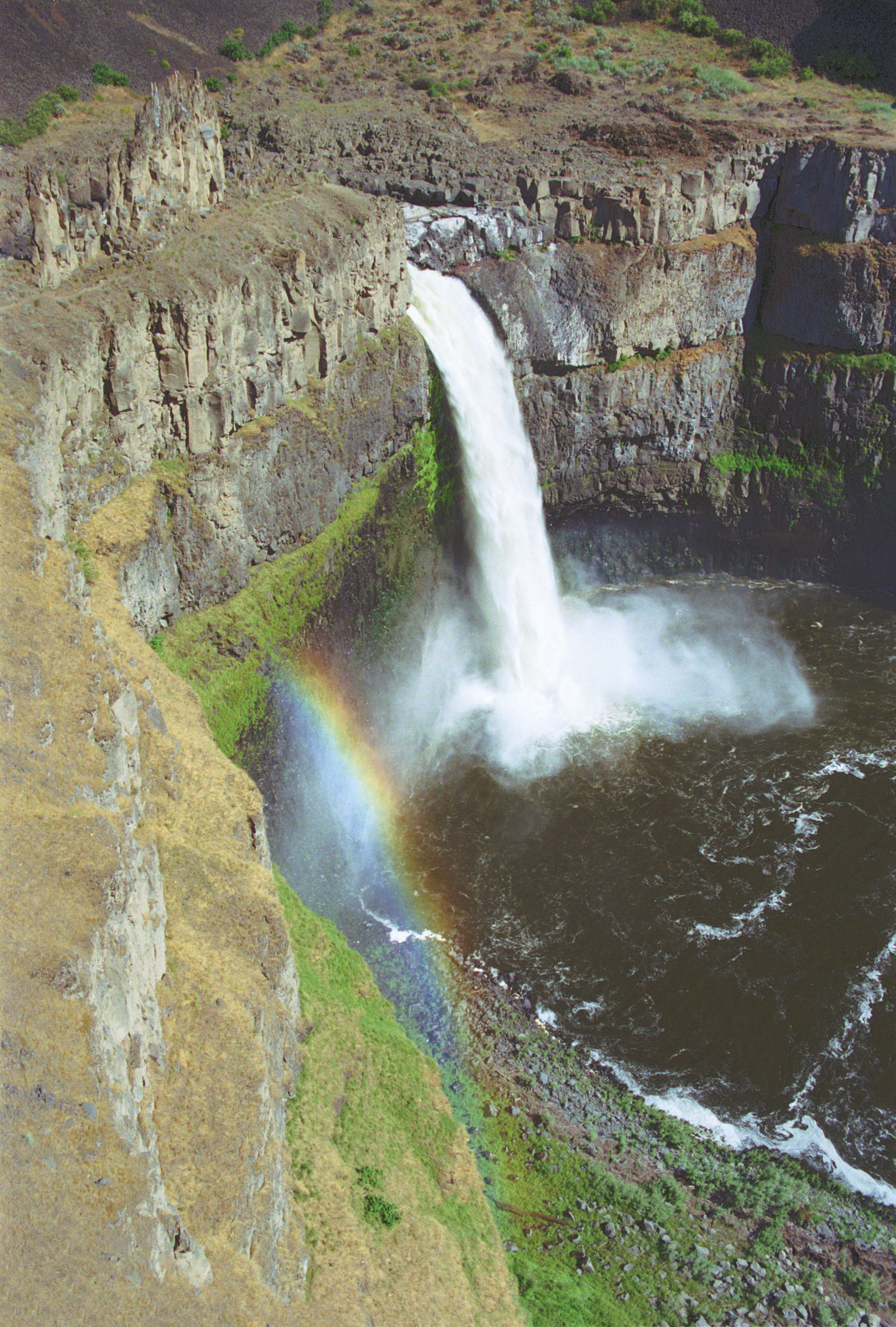
Palouse Falls [Photo credit:D S Dugan]


(Forgive the departure from home range limitations, but I couldn't resist this one.)

Thursday, May 14, 2009

Speaking of Grizz

Here is more Doug Peacock on Democracy Now!, on encountering the wild with respect:

and on addressing the wilderness within:

Don't forget to listen to local radio station KDUR, which broadcasts DemocracyNow! at 12 noon on weekdays, and support the airing of such opinions.

P. S. - Once you've read Dave Peterson's book on grizzlies in the San Juans, think about checking out "In the Presence of Grizzlies, Revised and Updated" [2009, Doug Peacock & Andrea Peacock]. It's newly out in paperback, and I bet your favorite local bookstore can find you a copy.

Monday, May 11, 2009

Ghost Grizzlies revisited in 3rd edition of San Juan Country classic

No one is really sure if Grizzlies will make a comeback in the San Juan Mountains -- but a fine book about the possibility is back.

David Petersen's classic Ghost Grizzlies: Does the great bear still haunt Colorado, first released in 1995 and recently fallen out of print, has just been re-released by Raven's Eye Press in a revised third edition that includes 15 new photographs.

Petersen has updated the story to bring it into the 21st century, but the real value of this book is timeless: Petersen's vivid images of and unabashed love for the San Juan Mountains and the people who inhabit them -- and for the bears that once, and may still, also call them home.

Here's a review I wrote when Ghost Grizzlies was first released. It's still every bit as relevant now as it was then -- as is the book itself.

Colorado is a land of wilderness with the "wild" removed, argues Durango-based author David Petersen, where the back country has been sanitized by the systematic elimination of the wolf and the grizzly bear. Still, he muses, the San Juan Mountains are "another Yellowstone waiting for permission to happen." And what might give the San Juans that permission is the discovery of a surviving population of native grizzlies.


The search for those wild stragglers is the story at the heart of Petersen's latest book, Ghost Grizzlies, which also offers an affectionate and educational look at the San Juans and the distinct and persistent species of bear it spawned and may still support.


>Still, the search is for more than just animals. "The grizzly is a universal metaphor for wilderness," says a member of the team searching for the great bear in Colorado. "The ultimate question we're raising is: How wild do we want the San Juans to be?"


It is this question that underlies the journalistic look at the issue of whether grizzlies exist and should be allowed to survive in the San Juan Mountains. And for Petersen, the probing of this question is also a personal journey, one that through his evocative and deeply personal writing he takes us along on, both on the ground and through his thoughts. It is a journey well worth taking.


Since 1951, the official line from the Colorado Division of Wildlife has been that the San Juan Mountains are inhabited by "lots of black bears but no grizzlies."

This line continues despite the 1979 killing of an adult grizzly sow (who had at some point in her life nursed cubs) in the South San Juans and a continuing trickle of reports of grizzly sightings. Since the land management agencies refuse to act on those reports, the private San Juan Grizzly Project has for several years now studied and compiled evidence -- yet no live bears -- that indicates that at least some grizzlies survive in the San Juans. But "evidence is not proof," the agencies counter.

Petersen offers up this evidence but goes on to examine some tough questions: Even if it is proven that grizzlies survive in the San Juans, is extinction of what may be a distinct subspecies inevitable? To prevent that, should bears from other regions be introduced? To what degree should human uses of the land be limited? Or an even tougher question: Would it be best for the grizzlies themselves to not prove they exist since they have gotten by so far without special treatment?


Petersen doesn't answer those haunting questions, but that is not his goal anyway; his goal is to inform the public that will have to, and he believes should, decide the fate of the grizzly bear -- either native or introduced -- in Colorado. He does this by letting the major players from all sides discuss those questions, plus he offers what information is known and some personal reflection, and then presents this full picture.


All in all, this is a lot of good work resulting in a hell of a good book. Petersen is not objective about the issue -- he openly states that he hopes grizzlies are out there in our extended back yard -- but he has been commendably fair, accurate, and thorough. This is honest journalism, the toughest to write.


But Ghost Grizzlies is more than mere reporting. It is many things -- investigative journalism, history, natural history, social commentary, personal narrative and an essay on the value of wilderness -- but these mesh to form a whole bigger than the parts. They combine to become story, the story of the late-20th century San Juan Mountains.


This is also a human story. Petersen brings to life the people, both historical and alive now, enmeshed in the grizzly history, and it is these characters that make the San Juans real as a place where people were and continue to be molded by the landscape. Included in these tales is a humorous venture with the last man to legally kill a grizzly in the San Juans, a long talk with the outfitter who was mauled by, and then killed, a supposedly-extinct San Juan grizzly in 1979, and several walks with a South San Juans rancher who believes there are still grizzlies on his property. "I hope we're right," he says. "The grizzly is welcome here."


These in-depth and honest characterizations and personal revealings -- like the fact Petersen admits to very much liking the former government trapper who shows no remorse over killing grizzlies -- shows Petersen is mature enough a thinker and person not to resort to easy stereotypes or simple battle lines in this issue he is so deeply involved in.


And these encounters also make the author himself a character as he muses on the fate and significance of the San Juan Grizz. Like the other grizzly defenders he finds -- mostly ranchers and outfitters and hunters -- we see that Petersen is no New Age, dreamy-eyed, posy-sniffing nature mystic. He is a Vietnam veteran, a hunter, and backcountry walker who likes his fireside shots of bourbon.


It is through this woodsman's sense and naturalist's knowledge, spiced with a good sense of humor and an unabashed love for this place, that Petersen's book enters the realm of the finest nature writing, for he manages to make us feel the value of the real wild San Juans. Which is what this book is really about, with the Griz as spiritual symbol, as historic linkage, and as biological litmus test.


As Petersen himself says: "by working to save the bear and its tiny wilderness enclaves, we are working to save ourselves."


Learn more about the third edition of Ghost Grizzlies here.

Visit David Petersen's website and order his books here.

Saturday, May 2, 2009

GO-ing small

"The little things? The little moments?" once queried Buddhist writer John Kabat-Zinn.

"They're not little," he answered himself.

In fact, for some of us, they're damn near everything.

For about a third of the year, working at least one day per weekend and several nights a week is the norm for me. That's because I've crafted my life to be driven by a sort of migration pattern: I work hard in the Fall, Winter and Spring, and the Summers I keep for me.

This doesn't mean I don't "work" in the Summer -- it just means I work at what I want. I work on creative writing, I do personal research, I explore things and places and activities, and I work on my other personal business ventures. I let my spirit go places the places it craves.

And I get out: In the Summers, my family and I venture forth on many long and short trips, both nearby and faraway -- including epics over the past several years that have included long, extended trips to Europe, Norway, Northwestern Canada, Alaska, and the Upper Peninsula of Michigan.

And that philosophy is something my wife and I have endeavored to pass onto our kids: GO!

Because to me, GOing is what it's all about. And so you should carefully strategize your life to maximize your ability and opportunities to GO!

Like any good migration pattern, though, the yang requires some yin. So my yin is in -- meaning, indoors, a lot, for a big chunk of the year. So, in the non-Summer months, I give myself over to closer-to-home ventures: teaching, free-lance writing, running a karate club, and managing the other little businesses I've got going to help forge this piecemeal occupational existence I attempt to live off. And it damn near fills my days -- and nights, and weekends.

But that doesn't mean I don't still hanker to GO. It's just that that GOing has be sneaker and closer-to-home than in the big open of Summer.

So in these seasons of long days and nights hammering away at business busy-ness, I feed the need in me to GO! with lots of little snacks rather than the big fun feasts of Summer venturing.


This observation was driven home to me the other day when my son gave me a hard time for working on a weekend day. His intentions, I like to think, were noble: to return to me the favor of raising him to appreciate getting out a lot by calling me on my staying in a lot.

That's when I took stock of all the little GOings I manage to squeeze into the days ostensibly passed with my nose to the proverbial grindstone: Short walks with the dog. Longer -- but still quick -- runs. Bursts of karate practice in the back yard. Grading or writing out in the sun on the deck. Commuting on foot to my various obligations. Doing errands in town on my cruiser. Soaks under the stars with my wife and kids in our hot tub. Meals taken out on our front porch. And then there's the nights once or twice a week spent sleeping out in the back yard ...

Little things, but deliberate things. Meaningful things. Brief but powerful things that put me into physically, tangibly, meaningfully into the world around me -- the traveling traveling at home, every day -- and all woven into the thick fabric of my packed-to-bursting days. Not big going-aways, but GOings nonetheless.

In these busy months I may not be able to go far, but GO! is still my philosophy, my mantra, war cry, my life purpose. So I still GO, even at home. GO at home. Or, as I've come call it for short, GOh!.

And I'm going to teach that to my kids, too -- Fall, Winter, and Spring. Go! And GOh! even more.

Tuesday, April 28, 2009

Highway of Dreams

It'd be funny -- as I'm sure it is to the rest of the country -- if it wasn't so sad, ugly, expensive, arrogant, wasteful, and stupid.

I mean, of course, Durango's enormous new partially constructed -- and, we learned last week, absolutely worthless -- highway overpass and its surrounding traffic-strangling construction zone on US 160 east of town. This metal and concrete monstrosity spans the highway like the swollen leg of some out-of-context roller coaster, someday to swoosh traffic downward to smoothly merge with the highway and siphon cars and trucks off the highway and up onto the mesa south of the road.

The reason for such an elaborate traffic contraption in a wee backwoods community like Durango was that CDOT had decreed that US 550 -- gateway to Farmington -- needed a rerouting from the long, steep cut in the side of Florida Mesa that leads that north-south traffic down to its confluence with the east-west-running US 160.

Which is fine. But CDOT, in its manic road-building madness assumed it would acquire the land required to, well, connected the new span with the present highway. Now it seems the landowner in that path ain't too happy with the idea.

Seems it now ain't gonna' happen ...

Last week, the Durango Herald reported that CDOT now admits the the overpass will never connect. Still, no mere waste nor foolishness will stand in the way of the Highway Builders! The project,says CDOT, is going ahead with ints next phase, need be damned!

So far, the project has cost $35 million, including $4 million received from the federal government's 2009 American Recovery and Reinvestment Act.

Meanwhile, the Durango 9R school district is laying off 19 teachers and staff ...

Maybe they can get jobs flagging for the new Durango Ornamental Overpass.

But, CDOT assures us, it won't go to waste. "It will serve its function in providing access to U.S. 160 for those north of the highway," says the Herald story. (I assume it means "south of the highway," otherwise the overpass has some other problems. Which, I suppose, wouldn't be a complete surprise.) Which means it's only a small exaggeration to say this $40-million-plus bridge will serve, like, seven people (who have already said they don't want the bridge) and six thousand cattle.

Seems appropriate to me that this item appeared on the front page of our local paper on the 20th anniversary of the release of the movie "Field of Dreams," and its culturally embedded catchphrase, "If you build it, they will come."

Exactly.

Because that is exactly -- I mean aside from its Hell-bent money-wasting land-ravaging road-building mania (see also: Pass, Wolf Creek) -- my gripe against CDOT: If you build it, they will come.

See one of the things that led my wife and I to throw out our anchor and set up our lifetime base camp here in the Four Corners was one interesting fact: It’s about as far away as you can get from an interstate in the continental U.S. That’s changing, though. Even if there's no official designation, you can now follow a nearly a defacto interstate from Albuquerque to Salt Lake City.

Why don't we embrace the fact that the Four Corners is remote. And that most of us like it that way. That that's a valued characteristic. That in the future, as we evolve into new economies, that may be its greatest asset. That it's a condition that will serve us and our kids in the future.

Toward that end, I have a modest proposal: I’d like to see CDOT become simply a fleet of ten thousand pickups with dirt and shovels in the back.

The department will hire anyone who wants and needs a job -- a great way to support high school kids, ski bums, off-season river rats, anyone else who just wants to make few bucks to get to work out of doors. Then they'll just ... drive around, look at the scenery, pick up trash, help wayfaring strangers and RVs bedazzled by what will ultimately become an increasingly degraded series of roads over time, a process of road-to-trail evolution that will only be minimally mitigated by the labor of these CDOT employees in pick ups shoveling loose dirt and asphalt into the decaying pavement -- as the Western Slope of Colorado blossoms in a new cultural revolution linked directly to its return to its status as a hard-to-get-to place.

And someday our kids will take their kids out for a walk along the highway-turned-bikepath that rises from the old highway in a marvelous structure that swoops up onto the wooded mesa above -- an lasting monument to a time when people didn't know any better.

Now that's my kind of field of dreams.

******

This post also appears on InsideOutsideMag.com. Check it out!

Sunday, April 26, 2009

Everett Ruess: Mystery (Almost) Solved

Everett Ruess, that young vagabond who sparked the gleam of adventurous mystery in many an eye, has been found for sure. He was originally lost in Utah 75 years ago. His disappearance assured his place in the annals of wild desert mystery, earning his name mentions by everyone from Edward Abbey (liked his fellow desert rat) to Jon Krakauer (used him as a comparison to Into the Wild protag Chris McCandless) to Wallace Stegner (his kindest words about the whippersnapper were that he wrote "barbaric adolescent yawp"), to, um, bloggers everywhere.

Hats off to you, kiddo, for remaining silent for so long, and for urging dreamers to keep on dreamin'.

Friday, April 24, 2009

R-U-There?


You-Are-Here Pass

We’ve named the mountain passes,
fastened brass plaques where we stop
and sigh, but nothing in the natural world
remembers its name.

The wilderness answers to its own
wide spirit, counts any moment
like starlight that arrives unburdened
by the calculations of time.

“You are here” says a dot
on the map I unfold.
“You are not” says the rock
where I plant my foot.

Home = land, Peacocks, ol' Ed, and bear country!


Democracy Now!, locally available on Durango's own community radio KDUR, has been traveling the western reaches, giving voice to seldom-aired commentaries on the madding empire. In the above interview, Doug Peacock echoes a phrase voiced just yesterday by our own, ever-lovin' sabot-packer, Ken Wright.

Amy Goodman has been soliciting story ideas from the areas they are visiting on this tour, and she will be speaking at the Green Festival in Denver on May 2. Got one?

Thursday, April 23, 2009

More on the Misplaced Monument ...


The Cortez Journal -- confronting what might be the biggest story to hit the area since the whackos with guns rampaged through town and disappeared into the wilderness 10 years ago -- has done some fine journalistic investigation into the case of the apparently misplaced Four Corners Monument. (Three-Point-Nine-Seven Corners M0nument ...?).

It seems the monument isn't really misplaced, it's more, like, just confused.
The boundaries of most Western states were created based on the Washington Meridian, not the Greenwich Meridian, which accounts for the 2.5 mile miscalculation made by geocachers who probably used the Greenwich Meridian. The United States began using the Old Naval Observatory in Washington, D.C., as a surveyors starting point in 1850, but switched to using the Greenwhich Meridian - the world's Prime Meridian - in 1884, according to the Ordnance Survey, Great Britain's national mapping agency.

The Four Corners was designated based on an 1875 survey. Subsequent surveys have shown that the 1875 survey was about 1,800 feet - not 2.5 miles - off, Doyle said. Had the survey been accurate, the Four Corners would have been designated about 1,800 feet east of its current location. Even so, an 1,800-foot discrepancy was still fairly accurate considering the surveying equipment used in 1875.
All this surveying stuff is just all around confusing in general, the article concludes.

Information gathered by Senior Geologist Bill Case, of the Utah Geological Survey, found that the original Four Corners surveyor, Chandler Robbins, missed the mark in 1875 due to problems with early surveying techniques and rough terrain. Robbins' diary from the Utah Historical Quarterly stated, "The needle of the compass had lost its power, which I did not discover until we had entered upon the survey."

Low-powered telescopes, combined with having to use the solar system to survey, made accuracy difficult. And that didn't begin to describe the hassle with vegetation, mosquitoes and wide ranges of elevation, Case said.
Actually, the article is kinda fun and interesting. Check it out here.

I'll take that news over more stories about dipshits with firearms any day.